Should you move the toilet, shower or vanity? What moving plumbing adds in a Canberra bathroom
If you are planning a bathroom renovation in Canberra, the one decision that moves the price more than any tile or tap is whether the plumbing stays where it is. Here is what each move involves, what it adds, and when it is worth it.
The question I ask before anything else
When someone sends me a design, the first thing I look for is not the tile. It is where the toilet, the shower, the vanity and the bath are now, and where the drawing has put them. Every plumbing line that changes, in the floor or in the wall, adds to the price. Keep all four where they are and the plumber's job is to disconnect, rough in for the new fixtures in the same places, and connect again. Move one and a second trade or two comes into the job, along with days that were not there before.
That is why two quotes for the same room can be so far apart. One of them kept the layout. What a renovation costs is set out in the cost guide, trade by trade; this guide is about the decision that sits underneath it.
Why a move costs more here than you expect
Most Canberra homes sit on a concrete slab. The drains run through it, set in place when the house was built. To move a fixture, the floor is cut open, new drainage is run with the fall it needs, and the slab is made good before anything goes back on top. That is concrete cutting, extra rough-in, and two to four more days on the job, before a tile is laid.
A timber floor is different, not easier. The pipes are reachable from below, but the floor still needs a single sheet laid across it before tiling so it cannot move, and a new waste means a new hole through both. The sheet is explained in what is under your bathroom tiles.
In the wall, the move is usually smaller. A mixer or a tap set can shift along the same wall with new lines run inside the framing. It is the floor, and the waste in it, that decides whether a move is a small job or a big one.
Fixture by fixture
The toilet. The toilet has the largest drain in the room and it needs fall to work, so on a slab even a short move means cutting the floor and running new drainage. It is the dearest fixture to move for the least visible change. If the toilet works where it is, leave it. If the door opens onto it, or it sits where the only sensible shower could go, the move earns its money.
The shower. Two parts move here. The mixer and the rose are in the wall; the waste is in the floor. Moving the shower along the same wall, so the waste stays close to where it was, is the cheap version: in our experience roughly $500 to $600 of plumbing plus about $300 to install, so about $1,000 for plumbing and installation. Moving the shower to the other side of the room puts the waste in new concrete, and that is a different quote.
That $1,000 is the average case we have seen in the Canberra market as of 2026. It differs by city, by the state and condition of the bathroom, and by what is behind the wall when it is opened. Treat it as a guide to the size of the job, not as a price.
The vanity. Water in and waste out, and the waste can often reach the existing point. Moving a basin along the same wall is the smallest move in the room. Moving the vanity to a wall that has never had water is a new run in the floor or the wall, and priced as one. A second basin, if you are thinking about a double vanity, is a second set of connections, not just a second bowl.
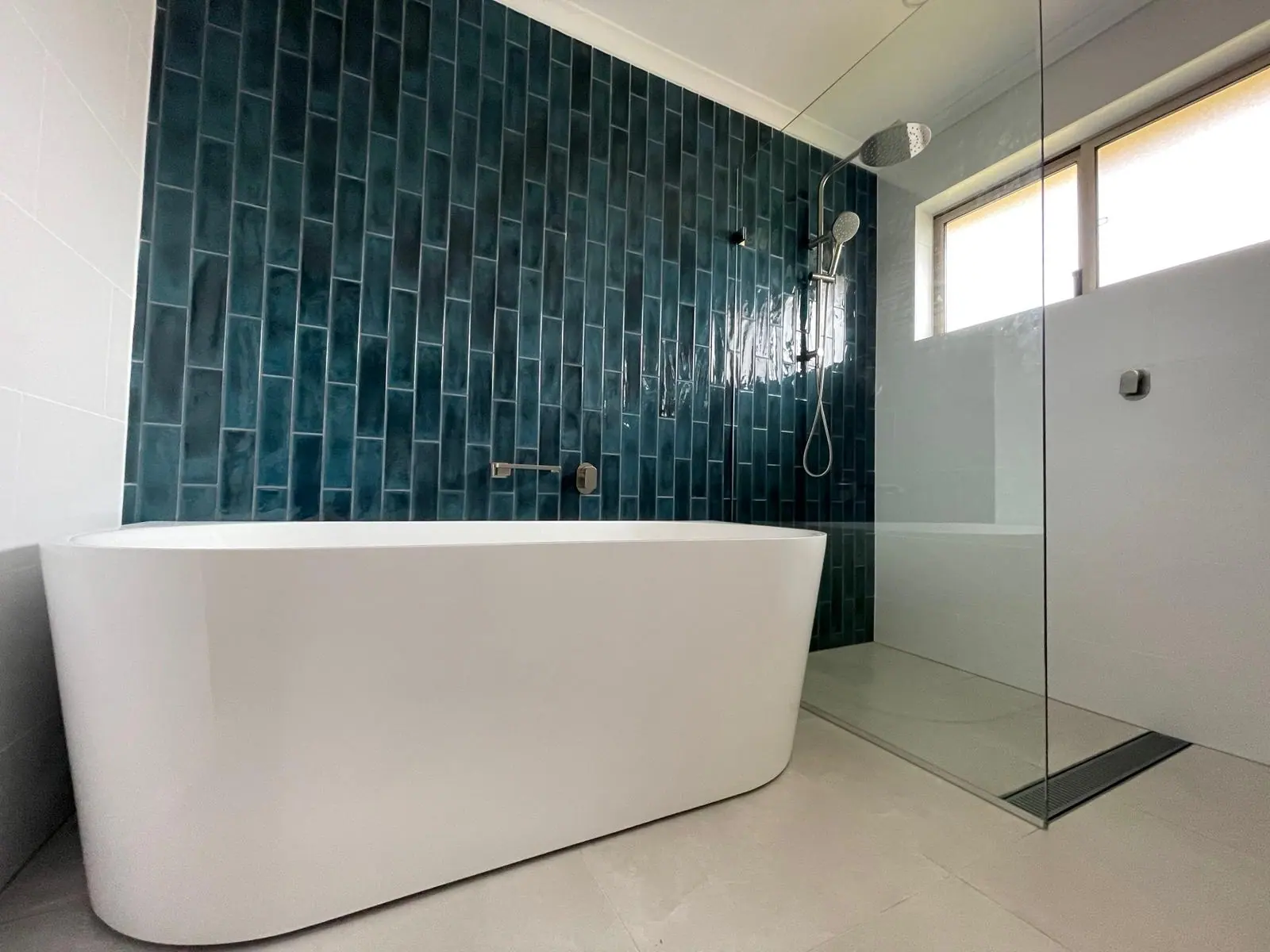
The bath. Taking a bath out for a walk-in shower is a change we make often in the 1960s to 1980s brick homes of Belconnen, Tuggeranong, Woden and the Inner North. The bath waste comes out, a shower waste goes in with the floor falling to it, the tap set moves, and the whole floor and the shower walls are waterproofed again. It is a real plumbing move, and it is also the change owners tell us they are gladdest they made. Putting a bath back in where there was only a shower is the same work in reverse, plus the bath's own tap set.
When moving the plumbing is worth it
- The door hits the toilet or the vanity, and the room cannot be used with the door closed.
- The shower is too small to stand in, and the only place for a proper one is where the bath or the toilet is.
- Nobody has used the bath in years and you want a walk-in shower, or a double shower.
- You are renovating for the next twenty years and the layout is the thing you have always disliked.
In each of those the move changes how the room works every day. That is worth paying for once.
When to leave it where it is
- The room works and you are renovating because the surfaces are tired. New tiles, a new vanity in the same place, a new screen and a proper membrane transform a bathroom without a single line moving.
- The budget is tight. Keeping the layout is the biggest single saving in a quote, and it costs nothing in quality. Put the money into the layers under the tiles, where it lasts.
- The room is small. Most small bathrooms can feel bigger without moving a wall, and my small bathroom guide shows how.
What it does to the timeline
A standard bathroom with the layout kept runs two to four weeks from demolition to handover. When plumbing moves, the layout changes or there is custom joinery, it runs four to six. The extra time is the concrete cutting, the new rough-in, and the waterproofing cure that follows it, and none of it can be squeezed. The week-by-week order is in how a renovation works, and the membrane that goes over every new penetration is in the waterproofing guide.
How we quote a move
Before the quote is final we come out and look at the floor and the walls, because the price of a move depends on what is there. On a slab, we tell you which fixtures stay in place and which ones mean cutting concrete. On a timber floor, you hear about the sheet. Every line that moves is written into the quote as its own item, so you can see what the layout change is costing and decide whether it is worth it to you. More than 800 bathrooms since 2008 have taught me that the owners who are happiest a year later are the ones who made that decision with the number in front of them.
Try the layout before you decide
Build your bathroom in 3D in the instant quote designer with the fixtures where they are now, then move the shower or take out the bath and send us both. We will tell you what each version involves. Or ask for a fast free quote, see our bathroom renovations in Canberra, or look at recent work to see how other Canberra rooms were laid out.