How Much Does a Bathroom Renovation Cost in Canberra?
A full bathroom renovation costs most Canberra homeowners between $18,000 and $28,000 in 2026. This guide breaks that down by scope and trade so you can budget your own room.
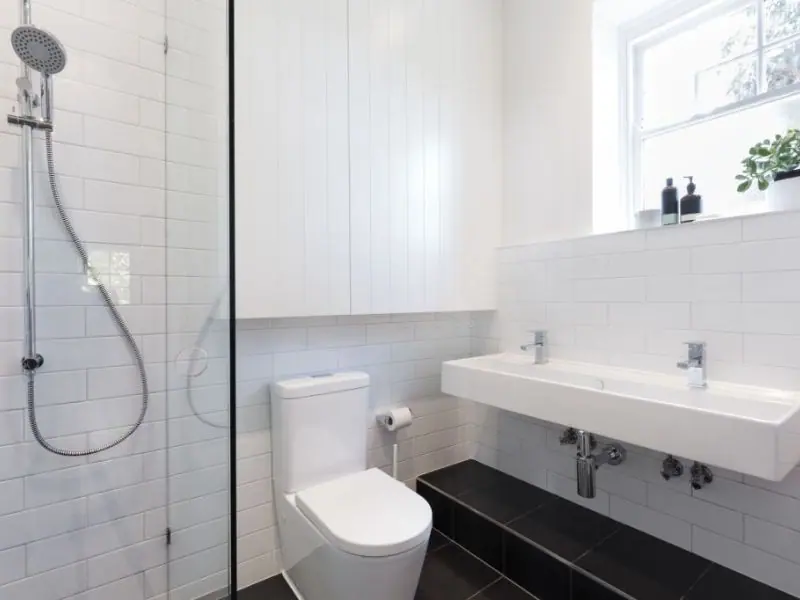
Every range on this page is a 2026 figure including GST, and every one is subject to site inspection. Two bathrooms the same size can sit thousands apart once the old tiles come off, which is why we inspect the substrate before we finalise a quote rather than after.
What a renovation costs, by scope
| Scope | Room size | Typical 2026 range | What that buys |
|---|---|---|---|
| Small ensuite | 3-4 m2 | $12,000 - $18,000 | Demolition, waterproofing, tiling, new fixtures, basic vanity |
| Standard bathroom | 5-7 m2 | $18,000 - $28,000 | Full renovation, quality fixtures, frameless screen, new vanity |
| Large or main bathroom | 7-10 m2 | $28,000 - $38,000 | Full renovation, premium tiles, double vanity, bath and shower |
| Luxury | any size | $38,000 - $55,000+ | Custom joinery, stone benchtops, freestanding bath, heated flooring |
Across the wider market a standard full renovation runs $18,000 to $35,000, and the mid-range result most people are picturing - good tiles, a frameless screen, a vanity they are happy to look at - lands at $24,000 to $28,000. A custom-designed bathroom typically starts from $15,000, and a genuinely bespoke design can exceed $30,000.
A full renovation covers demolition and waste removal, substrate repair, waterproofing to AS3740:2021, wall and floor tiling, plumbing, electrical, fixtures and fittings, painting, silicone sealing of every wet-area joint, and the final clean. Before you compare two quotes, read what is and is not included in a bathroom renovation - most price gaps are scope gaps. Budget does not change the schedule much either: a standard job takes two to four weeks and a complex one four to six, as the week-by-week process guide explains - and that guide also covers approvals and what changes if your home is across the border in Queanbeyan.
Where the money goes
| Trade or component | Typical cost | Share of budget |
|---|---|---|
| Tiling labour, adhesive and grout | $4,500 - $8,000 | 22-28% |
| Fixtures and fittings | $3,500 - $10,000+ | 18-30% |
| Plumbing labour | $2,500 - $5,500 | 12-18% |
| Tiles (materials only) | $1,500 - $5,000+ | 8-15% |
| Waterproofing labour and materials | $1,200 - $2,500 | 6-8% |
| Demolition and waste removal | $800 - $1,800 | 4-6% |
| Electrical: fan, lighting, heated rail | $800 - $2,000 | 4-7% |
| Painting and finishing | $600 - $1,200 | 3-5% |
| Project management and margin | $1,500 - $3,500 | 8-12% |
| Contingency (recommended) | $1,500 - $3,500 | 10-15% |
The most important line in that table is the last one. Always set aside 10 to 15 per cent as a contingency. Hidden water damage, a rotted substrate, old waterproofing that never complied and unexpected plumbing conditions are the four things that use it, and none of them is visible until demolition starts.
The six things that move the price
1. Whether the plumbing stays where it is
Keeping your toilet, shower and vanity in their existing positions is the single most effective way to control cost. Moving the toilet alone adds $1,500 to $3,000, moving the shower $2,000 to $4,500, and moving walls and plumbing for a new layout $5,000 to $15,000. Most homes here are slab-on-ground, so a relocated fixture means cutting concrete, new drainage runs and extra rough-in.
2. The tiles you choose
Budget ceramic runs $30 to $60 per square metre; imported large-format porcelain and natural stone run $80 to $250. On a 6 m2 bathroom that is a $2,000 to $6,000 difference in materials alone, before installation. Large-format tiles also take longer to set out and cut, which adds tiling labour. Our guide to bathroom tiles and materials covers what each material is like to live with.
3. Fixture quality
A mid-tier package - vanity, toilet suite, screen and tapware - costs $3,500 to $5,500. The same package in premium brands such as Caroma, Parisi, Nero or Kado costs $8,000 to $14,000. Both approaches produce excellent results; the difference is in aesthetics and brand preference, not durability.
4. The shower screen
Semi-frameless costs $800 to $1,400 supplied and installed. Fully frameless in toughened safety glass costs $1,400 to $2,800. A custom frameless hinged door with a return panel runs $3,000 to $4,500. That is one line item with more than $2,000 of swing on preference alone.
5. What is underneath the old tiles
This is the one line nobody can price from the doorway. Uncovering significant subfloor damage adds $2,000 to $6,000 with no change to the design you chose, which is what the contingency is for.
6. Access and the age of the house
A bathroom upstairs, or at the end of a narrow hallway, costs more in labour and equipment than a ground-floor room. Age costs more again: older and heritage homes need an inspection before the price is final, because mould, water damage and weakened framing have to be resolved before anything new goes in, and running modern plumbing and wiring through an old framework takes longer.
What $5,000 buys, and what $10,000 buys
At $5,000 you are doing a makeover, not a renovation
That budget covers repainting, replacing fixtures and hardware, vinyl or laminate flooring, tiles used as accents in the shower or as a splashback rather than full tiling, LED lighting, refinishing or replacing the vanity, and new tapware, showerheads and towel rails. Modern, Scandinavian and minimalist looks suit it, because they need no structural change. Painting and pulling out old fixtures are reasonable to do yourself; plumbing, electrical and waterproofing are not, for reasons set out in the renovation mistakes guide.
At $10,000 to $15,000 you are refreshing, not rebuilding
A cosmetic refresh is achievable in this range if the layout stays put and the existing waterproofing is sound: retiling over a compliant substrate, new fixtures, a new vanity, better lighting. Keep the room small, choose durable materials such as porcelain, and do not move a single pipe. Be clear-eyed about the ceiling, though. A full renovation below $15,000 is difficult to achieve with compliant waterproofing and licensed trades.
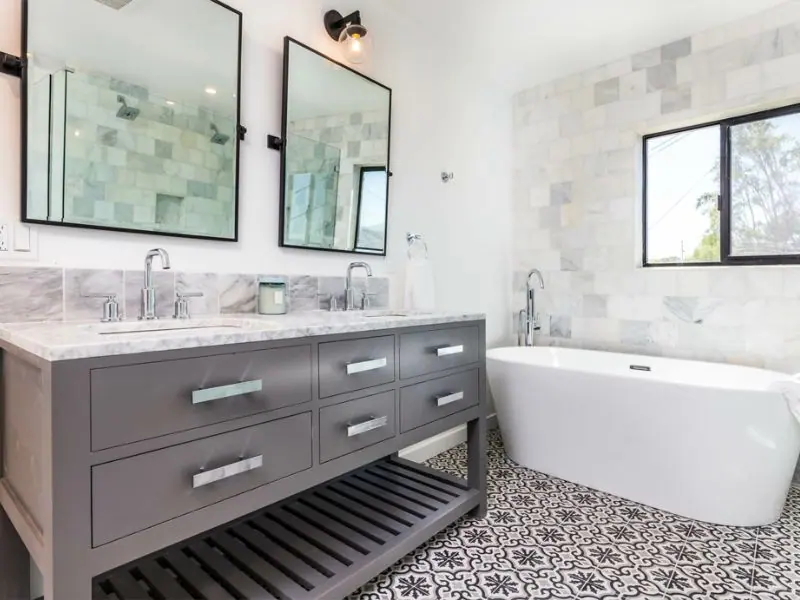
How to save money without cutting quality
Most of the saving is made in decisions taken before demolition, not in a discount asked for afterwards.
- Keep the plumbing where it is. The largest single saving available, and it costs nothing in quality.
- Choose mid-range tiles from Australian suppliers rather than imported stone. They lay the same and wear the same, without the freight.
- Take a semi-frameless screen instead of fully frameless, and a standard vanity instead of custom joinery.
- Mix the tiers deliberately. Spend on what you touch daily - the shower mixer, the basin tapware, the vanity finish - and save on what is hidden or generic: ceiling paint, standard-format floor tiles, a basic exhaust fan.
- Reuse what is serviceable. A sound vanity can be refinished rather than replaced.
- Settle every selection before work starts, and order early. A decision changed mid-job is the expensive kind, and a late delivery is a delay you pay for.
What never saves money is trimming the waterproofing, the substrate repair or the licensed trades. They are the parts you cannot see and cannot redo cheaply.
Why renovating costs more here than the national average
Prices in the ACT sit roughly 10 to 15 per cent above the national average, and licensed trades charge $85 to $120 an hour, aligning with Sydney pricing. There are four reasons, and none of them is a markup:
- base wages here are among the highest in the country;
- the construction sector is heavily occupied with government and infrastructure projects, so trade capacity is tight;
- materials freight in from Sydney, Melbourne or Brisbane, because this is not a distribution hub;
- ACT compliance requirements add real inspection and documentation cost to every job.
This does not mean renovations are overpriced here. It means the market reflects what compliant, quality work actually costs in this city.
How not to overcapitalise
Know your suburb's ceiling. A $55,000 luxury bathroom makes sense in a Griffith or Forrest home; the same spend in an established Tuggeranong house may not come back at sale. Look at comparable sold prices in your street before you set a budget.
Then spend in the right order. A bathroom with compliant waterproofing and mid-range tiles will outlast a visually impressive renovation on a non-compliant substrate. Avoid reconfiguring a layout for cosmetic reasons, too: $5,000 to $15,000 for a marginally different floor plan is the most common way to spend money a room never gives back. If yours is small, the small bathroom and ensuite ideas guide covers what can be done without moving a wall.
How to read a quote
The eight things a quote has to itemise, the red flags when one of them is missing, and the questions to ask before you sign are set out in how to check a renovator's licence and quote. That guide owns the checklist; this page gives you the numbers to test a quote against.
Questions we get asked about cost
How much does a bathroom renovation cost in Canberra in 2026? A standard full renovation runs $18,000 to $28,000, a small ensuite starts around $12,000, and luxury work reaches $55,000 or more. Every figure is subject to site inspection.
Can I renovate a bathroom for $10,000? You can do a cosmetic refresh for $10,000 to $15,000 if the layout and the existing waterproofing stay intact. A full renovation below $15,000 is difficult to achieve with compliant waterproofing and licensed trades.
What is the cheapest way to renovate a bathroom in Canberra? Leave the plumbing where it is, choose mid-range tiles from Australian suppliers, take a semi-frameless screen instead of fully frameless, and spend the savings on the mixer, the tapware and the vanity finish.
Does an older house cost more to renovate? Often, yes. Older and heritage homes need an inspection before the price is final, because mould, water damage and weakened framing have to be resolved before anything new goes in, and running modern plumbing and wiring through an old framework takes longer. Access counts too: a bathroom upstairs or at the end of a narrow hallway adds labour and equipment.
Why do renovations cost more here than in other Australian cities? ACT trade labour runs $85 to $120 an hour and local prices sit about 10 to 15 per cent above the national average, because of higher base wages, trades occupied by government and infrastructure work, freight from Sydney and Melbourne, and ACT compliance requirements.
Does a bigger budget make the job faster? No. A standard bathroom runs two to four weeks and a complex one four to six, whatever you spend, because waterproofing cure time is fixed by AS3740:2021 rather than by price. The week-by-week process guide sets out where the time goes.
Get a quote for your own bathroom
Our own quotes are free, detailed and itemised - no ballpark figures, no hidden extras - and the substrate is inspected before the price is finalised. Every project is managed by Oleg, the owner, from the first visit through to handover. A renovation done properly with durable materials should last 15 to 20 years, and ours is handed over with our 10-year workmanship warranty, waterproofing included, the product warranties for every fixture and the waterproofing compliance certificate.
Ranges are useful for planning and useless for deciding. To show us the room you actually want, use the instant quote designer: choose your size, layout and finishes, then send the design to us. Or ask for a fast free quote and Oleg will book a free site inspection and give you an itemised written quote. You can also see finished bathrooms we have built or read how our bathroom renovation service works.
Written by Oleg Cha, owner of Apex Bathrooms ACT. Renovating Canberra bathrooms since 2008. Updated September 2026.