Bathroom Renovation Mistakes to Avoid in Canberra
The most expensive bathroom renovation mistakes in Canberra are the ones homeowners never see. Here are the ones that cost the most, and the jobs no one should attempt themselves.
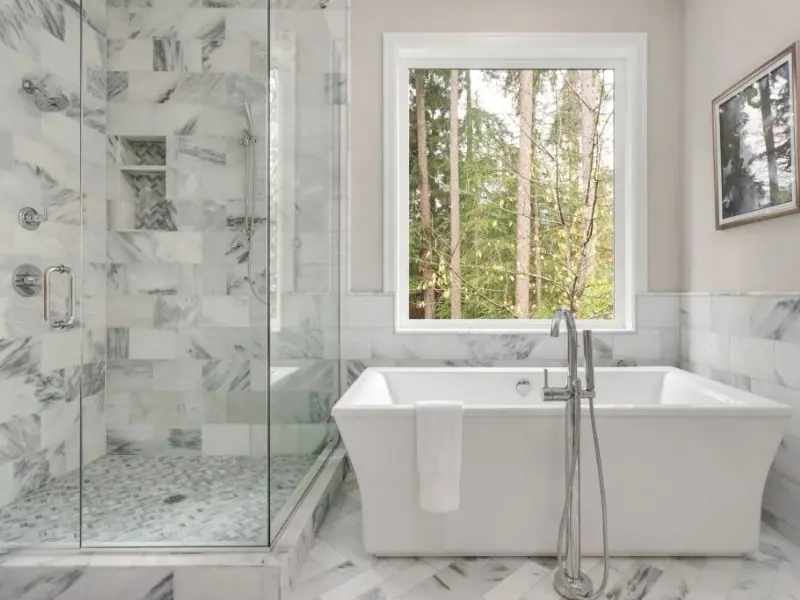
The mistake that hides: rushing the waterproofing
A membrane covered before it has finished curing keeps water out for a year or two, then quietly stops. The first you hear of it is a soft skirting board in the next room or a stain on a hallway ceiling, and by then putting it right means the new tiles come off again.
Nothing about that is visible at handover, which is why the schedule matters more than the finish. The cure times, and why an honest programme cannot skip them, are set out in the week-by-week process guide; what a compliant membrane and certificate involve is on our waterproofing page.
Planning mistakes
Starting without a finished design. Research, gather images, talk to a professional, and settle every decision before anything is ordered or demolished. Plumbing and electrical positions, storage and accessibility all belong in the design stage, not in week three.
Designing for looks and not for the layout. Function comes first. A sleek vanity with no storage is a daily frustration; a beautiful basin that is awkward to clean is a weekly one. Look at the layout honestly, then choose fixtures that are durable, water-resistant and easy to maintain.
Forgetting storage. The bathroom is the storage hub of the house and the most overlooked part of a renovation. Tall cupboards for what should be hidden, open shelves for towels, or joinery sized to what you actually own. Decide before the walls close up.
Ignoring lighting. One ceiling fitting does not light a bathroom. Light the vanity and the shower specifically, and choose fittings that are practical as well as good-looking.
Neglecting ventilation. This is the local one. Winters are cold, bathrooms are often unheated, and warm showers put condensation on every cold surface. Without an exhaust fan, an opening window, or both, that moisture becomes mould and mildew, and it damages fixtures and finishes. It shows up fastest in a small room, where the same steam has less air to disappear into. There is more in the waterproofing and ventilation guide.
Budget mistakes
Underestimating what it costs. Price materials and labour properly, then hold a buffer on top. The cost guide sets out how much, the ranges by scope, and what the contingency is usually spent on.
Buying on price instead of on life. The cheapest tapware and the cheapest tiles come back as repeated repairs and early replacement. Spend where it lasts and where you touch it daily; save on what is hidden or generic.
Misjudging the timeline. A standard renovation takes two to four weeks, and a complex one four to six. Ask for a written schedule with a start date and milestones so you can plan around it instead of guessing.
Build-quality mistakes
Overlooking existing water damage. Before you plan a thing, look for signs of leaks in the walls, floor and plumbing. In the ex-government houses and 1960s to 1980s brick homes of Belconnen, Tuggeranong and Woden - and in suburbs like Holt, Flynn and Kambah, where our own customers are - a failed membrane and a soft subfloor behind sound-looking tiles is the ordinary finding at demolition rather than the rare one, and the floor under the shower is where it shows first. Fix the cause, then renovate.
Skipping the safety details. Non-slip flooring where the floor gets wet, grab rails where anyone needs them, easy-to-clean surfaces, and cabinetry made for a wet room rather than adapted from another one.
Choosing the wrong renovator
Verify credentials and experience before you sign anything. Ask for references, reviews and proof of insurance. An inexperienced renovator produces poor workmanship, leaks and water damage that cost more to repair than the job ever saved.
Compare quotes on scope rather than on the bottom line - the red flags and the questions to ask before you sign are in how to choose a bathroom renovator, and the price ranges those quotes should land in are in the cost guide. Looking at finished work helps too: our recent projects show what the detailing is like once the trades have gone.
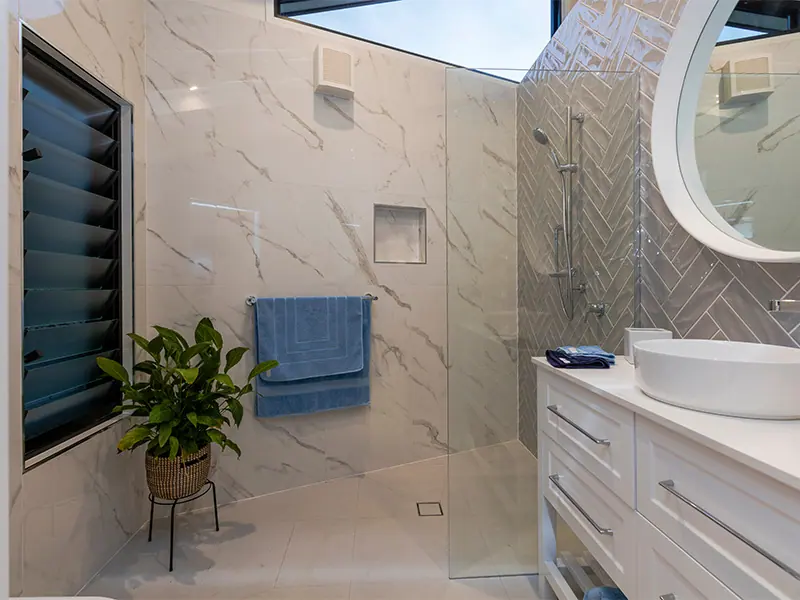
DIY or licensed trades
The honest case for doing it yourself is real. You save the labour, which is often the largest line in the quote. You can shop your own materials, use sales and your own contacts. You choose every finish. And for the right person it is satisfying work.
The costs are just as real. Time, first: a DIY bathroom takes weeks or months, against two to four weeks for a licensed crew. Then the gap in experience, which produces mistakes, rework and safety risks, and often a professional called in to fix something that now costs more. A DIY mistake is usually more expensive to put right than the labour it saved. And the stress, which arrives with the first unplanned problem.
What should never be DIY
- plumbing and pipe relocation;
- electrical wiring, outlets, exhaust fans and heated flooring;
- shower and bath waterproofing, which uses specialised membranes;
- intricate or large-format tiling;
- structural changes, including removing walls or reinforcing a floor for a heavy fixture.
Here, that list is not mainly about skill. Plumbing, electrical work and waterproofing are licensed trades in the ACT, and the waterproofing compliance certificate has to be issued by a licensed waterproofer. It is a question of who is permitted to sign the work off, and no insurer or buyer will accept a membrane nobody certified.
What is reasonable to do yourself
Painting, removing old fixtures, and the cosmetic work at either end of the job. If your budget is tight, that is the sensible place to put your own labour - and the cost guide shows what a cosmetic refresh can and cannot achieve.
The verdict is the same one the trade has always given: DIY suits someone with a tight budget and genuine experience. For everyone else, a professional job is done correctly the first time, meets the National Construction Code and AS3740:2021, and comes with the certificate and the warranty at the end. If your home is in Queanbeyan, remember you are in NSW, and the regulator and approval path differ from the ACT.
When to renovate instead of repairing
Some bathrooms want a fix, not a rebuild. These are the signs the repairs are no longer worth it:
- leaks, cracked tiles or faulty fixtures you are constantly patching;
- mould, dampness, peeling paint or a musty smell that never leaves;
- ageing plumbing that fails one fitting at a time;
- a layout that does not work and storage that never did;
- no safety features in a house where someone now needs them;
- a look you stopped liking a decade ago.
Constantly fixing leaks, broken tiles or faulty fixtures is the clearest sign that a full renovation is the cheaper path. If the room is also small, the small bathroom and ensuite ideas guide shows what can be improved without moving a wall.
Preparing properly
Set the budget with its buffer. Decide the look before you commit. Choose the renovator on credentials, not on price. Plan the layout with them rather than presenting it to them. Select every material and fixture before work starts. That is most of the risk removed, and it takes an afternoon.
Questions about renovation mistakes in Canberra
What is the most expensive bathroom renovation mistake? Rushing waterproofing cure time. AS3740:2021 requires 24 to 48 hours per cure cycle and tiling cannot start until a licensed waterproofer issues the compliance certificate. A membrane tiled over too early fails invisibly, years later.
Can I renovate my bathroom myself? You can paint and remove old fixtures. Plumbing, electrical work and waterproofing are licensed trades, and the waterproofing compliance certificate has to be issued by a licensed waterproofer, so those parts are not a question of skill.
What parts of a bathroom renovation must be done by a licensed tradesperson? Plumbing and pipe relocation, electrical wiring, outlets, exhaust fans and heated flooring, and the shower and bath waterproofing membrane. Structural changes and large-format or intricate tiling are best left to trades as well.
How do I check a renovator's credentials? Ask for the licence number, proof of insurance, references and recent work you can look at, and ask who will issue the waterproofing compliance certificate. Compare quotes on scope, not only on price.
How much contingency should I allow? Hold a contingency on top of the quoted price. The cost guide sets out how much, and what it usually gets spent on.
Do I really need an exhaust fan in a Canberra bathroom? Yes. Winters here are cold, bathrooms are often unheated, and warm showers put condensation on cold surfaces. Without an exhaust fan or an opening window that moisture becomes mould, fastest in a small room.
Get it quoted before you commit
The cheapest way to avoid an expensive mistake is a proper inspection and an itemised quote. Build your own room in the instant quote designer and send the design to us, or ask for a fast free quote and Oleg will book a free site inspection. If you would rather see how we work first, read what the bathroom renovation service includes.
Written by Oleg Cha, owner of Apex Bathrooms ACT. Renovating Canberra bathrooms since 2008. Updated September 2026.