Small Bathroom and Ensuite Ideas for Canberra Homes
Most small bathrooms in Canberra homes can be made to feel bigger without moving a wall. Here are the layout, tile and storage moves that work for homeowners.
What counts as small
An ensuite is usually 3 to 4 square metres. A standard bathroom is 5 to 7. Below about 5 square metres, every decision about the layout has consequences you live with daily, which is why small rooms reward planning more than large ones do.
Many of the small bathrooms we renovate are in the ex-government houses and 1960s to 1980s brick homes of Belconnen, Tuggeranong and the Inner North, where the original bathroom was built to a standard plan and has never been changed. The room is small, the window is small, and the layout has one obvious problem everybody who lives there can name.
Small is not all bad news. Fewer square metres means fewer materials and less labour, so the job costs less. Cleaning takes minutes. And a well-planned small room reads as considered rather than cramped, because every part of it is doing something.
The honest constraints: storage is tight, movement is restricted, fixtures have to fit without crowding, and lighting is usually an afterthought that leaves the room dim. All four are fixable.
The layout moves that work
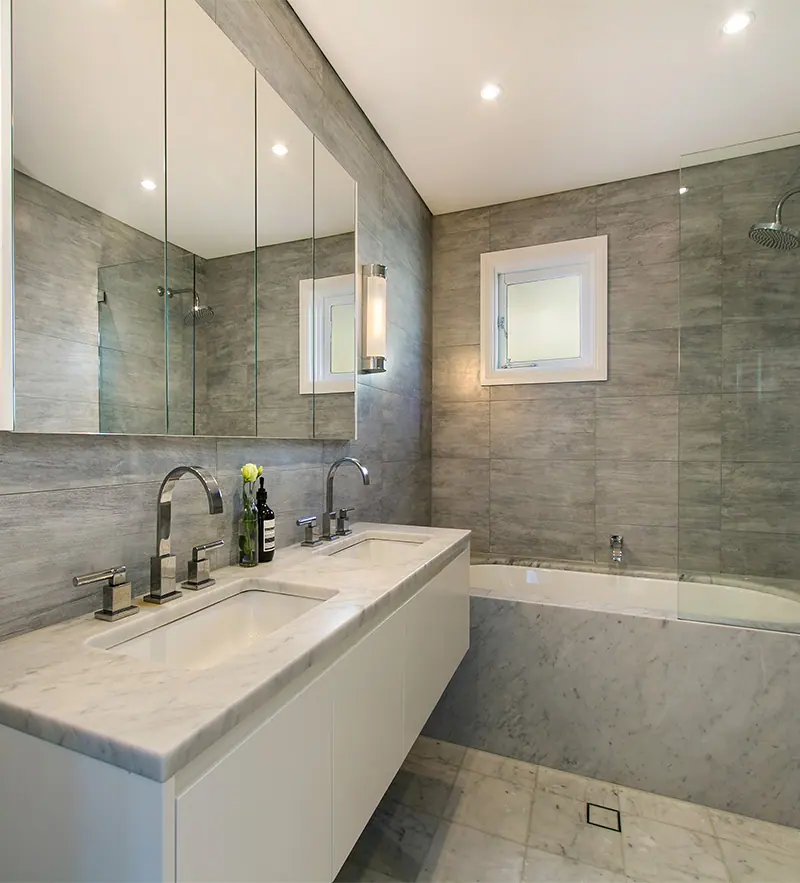
A floating vanity. Taking the bulky base cabinet off the floor lets the floor read as continuous, keeps light and air moving underneath, and makes cleaning easy. Pair it with a light-coloured top.
A corner shower. A conventional enclosure eats usable floor area. Moving the shower into the corner gives some of it back, often enough to change how the room feels to walk into.
A clear glass screen. Frameless or semi-frameless glass instead of a curtain or framed doors removes the visual interruption, so the eye reads the whole room rather than stopping at the shower.
A sliding or pocket door. A conventional door needs its swing arc kept clear, which is real floor area in a 3 to 4 square metre room.
Wall-hung everything. Floating shelves, a wall-hung toilet where the plumbing allows and a floating vanity all show more floor, and more visible floor reads as more room.
Multifunctional fixtures. A mirrored cabinet is a mirror and the storage. A vanity with drawers rather than a cupboard is storage you can actually use.
Keeping the fixtures where they are is what keeps a small job affordable - moving them is the single largest cost driver, as the cost guide explains.
Tiles: what actually makes a room look bigger
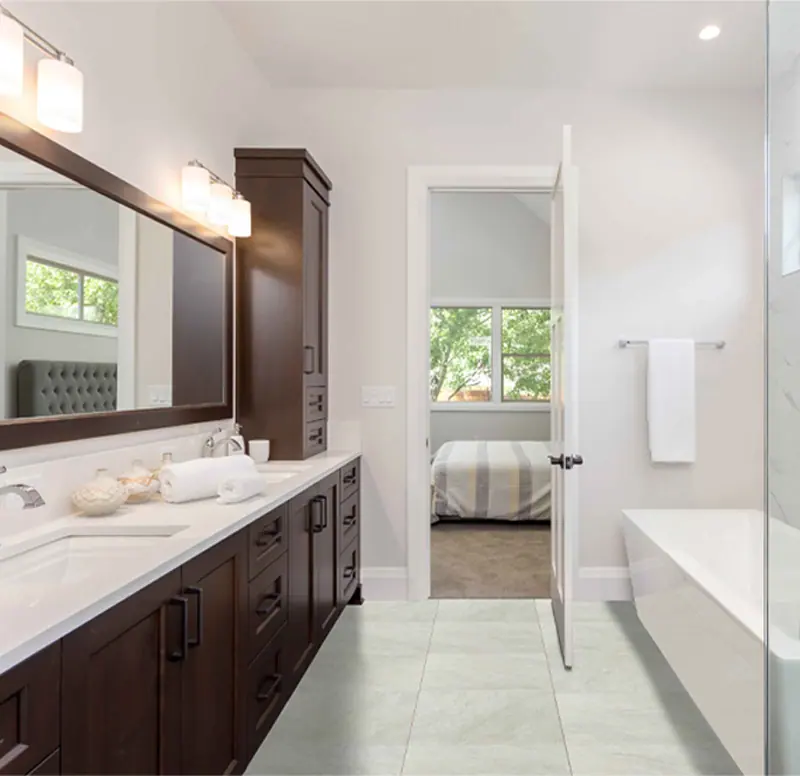
Light, neutral tiles - white, cream, soft grey, pale pastels - reflect light and create an airy, open feel, which matters most in a room with one small window.
Treat the grout as part of the design. White tiles with light grey grout give a subtle contrast; as a rule in a small room, keep the grout close in tone to the tile so the joints disappear rather than drawing a grid on the wall.
Fewer grout lines create a seamless, uncluttered look, so large-format tiles such as 600x600mm or 600x1200mm porcelain suit a small room better than most people expect. Rectified tiles allow minimal grout spacing for the tightest joint. The trade-off is honest: those tiles cost more per square metre and take longer to set out and cut, which adds tiling labour.
Three techniques worth knowing:
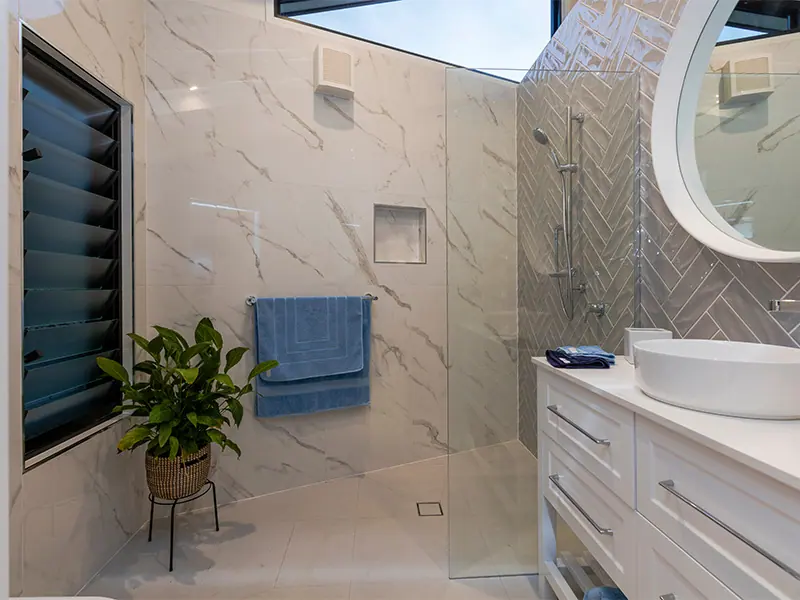
- Vertical placement. Rectangular tiles such as 300x600mm laid vertically draw the eye upward and give the illusion of height. Run them floor to ceiling in the shower to remove the horizontal break.
- Diagonal floor tiles. A narrow room reads as wider when the floor tiles run on the diagonal.
- Glossy on walls, matte on floors. Gloss reflects light and brightens the room; matte gives grip underfoot. The combination is both brighter and safer, and slip resistance is not optional on a small wet floor.
Herringbone and chevron add movement and depth, but they add one to two days of set-out and cutting, so price the pattern rather than assuming it.
Bold colour still works in a small room if it is used sparingly: one feature wall in deep navy, charcoal or forest green against lighter adjacent surfaces adds depth without shrinking anything. Mosaic in a niche or as a border does the same in a smaller dose. How a pattern like that is set out and installed is on our tiling service page.
Storage without losing floor
The rule is simple: take storage out of the wall instead of adding it into the room.
Recessed niches in the shower, sized to what you use. Recessed shelving between the studs. An over-the-toilet unit using dead air. Slimline drawers rather than deep cupboards. Glass-fronted cabinets, which read as lighter than solid doors. And a mirrored cabinet, which is the only piece of bathroom storage that adds nothing visually at all.
Avoid bulky cabinetry bought for capacity. In a small room the cupboard you cannot open fully is worse than the one that holds less.
Light, mirrors and the winter problem
Mirrors reflect light and create depth. A large wall-to-wall mirror or a mirrored cabinet works; positioning it opposite a window works better, because it puts the natural light back into the room.
Light in layers rather than from one ceiling fitting: the vanity and the shower each want their own light. Where there is no window, a skylight or a frosted glass panel brings daylight in without losing privacy.
Then ventilation, which is where small rooms suffer most here. Winters are cold, bathrooms are often unheated, and a warm shower puts condensation on every cold surface. In a small room the same steam has less air to disperse into, so it lands on the walls, the ceiling and the back of the vanity, and mould follows. An exhaust fan sized to the room, used during and after the shower, is the whole answer. The waterproofing and ventilation guide covers sizing and the warning signs.
Note what the risk is not. This is a dry inland climate; humidity is not the problem. Cold surfaces are.
Materials that suit a small wet room
Porcelain or ceramic tiles for walls and floors - durable and easy to clean. A porcelain slab or a solid-surface vanity top, because both are non-porous and low maintenance - engineered stone, including quartz, has been prohibited from supply and installation in Australia since 1 July 2024. Frameless glass for the screen. Fixtures in PVC or aluminium where weight matters, since both resist rust. Waterproof paint above the tile line. Tile supply rates are in the cost guide, and what each material is like to lay and to live with is in the tiles and materials guide.
Renovating the room you have, or building a new one
Renovating within the existing layout updates the look and the function for less money and less time. Building a new bathroom, or moving walls to make one, gives complete freedom and brings structural work, more time and considerably more cost - $5,000 to $15,000 in 2026 just for moving walls and plumbing.
It is a budget and goals decision, not a design one. If the current layout has one flaw rather than three, fixing the fittings usually beats moving the walls.
What it costs, and how long it takes
A small ensuite of 3 to 4 square metres typically runs $12,000 to $18,000 in 2026, subject to site inspection. What moves that figure up or down, trade by trade, is in the cost guide.
Time is two to four weeks for a standard renovation and four to six where plumbing moves or joinery is custom. A small room does not shorten the waterproofing cure, which is the fixed part of every schedule - see how a bathroom renovation works.
Before you start
Measure the room accurately before anything is chosen or ordered. Set the budget, including materials, labour and the contingency. Decide the style before you buy anything. Get advice on the layout early, because in a small room the layout is the whole job. Plan storage, ventilation and lighting deliberately rather than last. Clear the room completely before the crew arrives. And write your layout and preferences down and hand them over - it is the cheapest way to avoid a misunderstanding, and it heads off most of the problems in the renovation mistakes guide.
Questions about small bathrooms in Canberra
What tile colour makes a small bathroom look bigger? Light neutrals - white, cream, soft grey, pale pastels - reflect light and keep the room airy, especially where natural light is limited. Keep the grout close in tone to the tile so the joints disappear.
Should I use large-format tiles in a small bathroom? They work well, because fewer grout lines mean fewer visual breaks, and rectified tiles allow the tightest joints. They cost more per square metre and take longer to set out and cut, so weigh the look against the labour.
How do I get more storage without losing floor space? Take the storage out of the walls rather than adding it into the room: recessed shower niches, recessed shelving, an over-the-toilet unit, slimline drawers, and a mirrored cabinet that does two jobs at once.
How much does a small bathroom or ensuite renovation cost in Canberra? A small ensuite is the least expensive version of a bathroom renovation - less floor, less wall, less labour. The cost guide gives the current range by room size, and every price is subject to site inspection.
How long does a small bathroom renovation take? Two to four weeks for a standard job, four to six if plumbing moves or there is custom joinery. A small room does not shorten the waterproofing cure time.
Can a small bathroom feel bigger without moving walls? Yes, and it is the cheapest version of the job. A floating vanity, a clear glass screen, light large-format tiles, recessed storage and a well-placed mirror change how a room reads without touching the layout.
See what your room would cost
Small bathrooms vary more than large ones, so a range only takes you so far. Use the instant quote designer to build your room and send the design to us, or ask for a fast free quote and Oleg will book a free site inspection and give you an itemised written quote. You can also look through finished ensuites and bathrooms or read what our bathroom renovation service covers.
Written by Oleg Cha, owner of Apex Bathrooms ACT. Renovating Canberra bathrooms since 2008. Updated September 2026.