Laundry renovations in Canberra: cost, layout and mistakes to avoid
If you are renovating a laundry in Canberra, this guide covers the cost, the layout decisions, the approvals and the mistakes that cost homeowners the most.
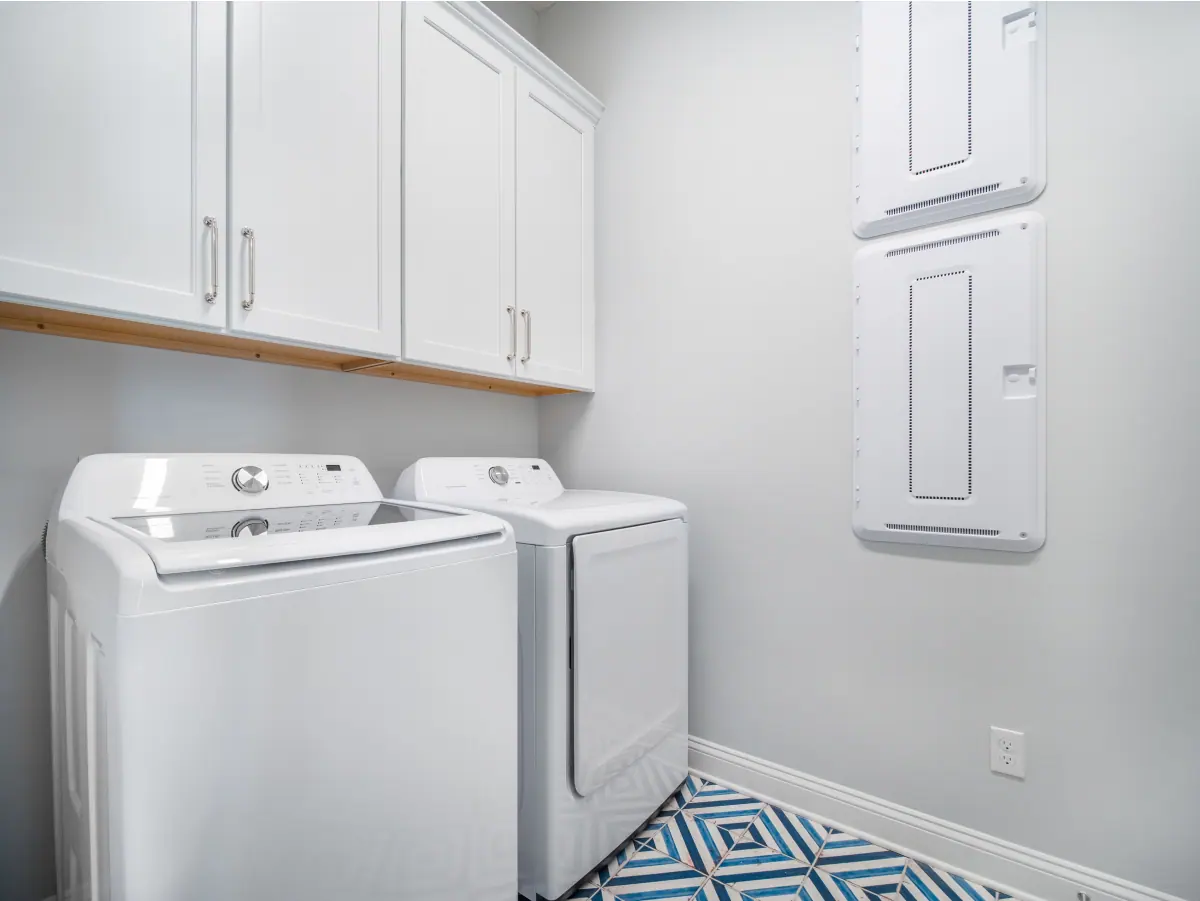
The laundry is the room people leave until last and then live with for years. It is also the cheapest room in the house to get right, because nearly everything that makes it work is decided on paper before anyone picks up a tool.
What a laundry renovation costs in Canberra
Most laundry renovations land between $5,000 and $15,000 in 2026. That is a wide band, because a laundry can mean new cabinetry and a benchtop in the same footprint, or it can mean moving the tub, the washer outlet and a power point. Any figure given before a site inspection is an estimate, not a price.
Four things move the number more than anything else.
- The size of the room. A larger laundry takes more materials, more labour and usually more plumbing and electrical work.
- The materials. A laminate benchtop and modular cabinets sit at one end of the range; a natural stone or porcelain benchtop and bespoke joinery sit at the other. Engineered stone is not anywhere in it - prohibited from supply and installation in Australia since 1 July 2024 - so a laundry benchtop is laminate, timber, solid surface, porcelain slab or natural stone.
- The appliances and tapware. Energy-efficient and space-saving units cost more up front and less to run.
- Whether the plumbing and electrical move. This is the expensive line item, and it is the one you control.
Keeping the existing plumbing and electrical layout is the single biggest saving available in a laundry. Most houses here sit on a concrete slab with the laundry waste cast into the floor, so moving the tub means cutting concrete. If something has to move, move the thing that buys the most improvement and leave the rest alone.
Set your budget, then hold a contingency back. On bathrooms we put aside the contingency our cost guide sets out for what turns up once the old room comes out; ask for the same allowance in writing on a laundry. Old cabinetry often hides a weeping tub connection or a floor that has been damp for years.
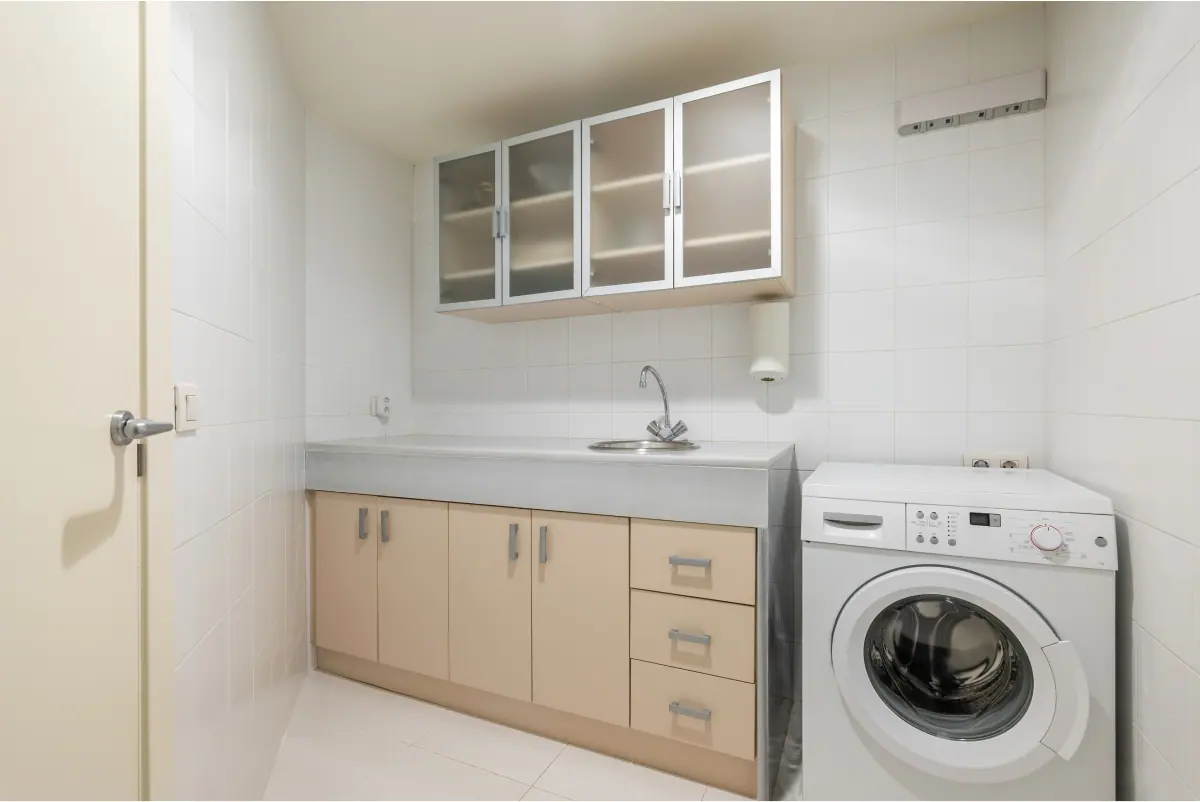
How long it takes, and whether you need approval
A straightforward laundry is a two to four week job, depending on the scale of the work and how quickly the materials arrive. You can usually stay in the house throughout, but you will need somewhere else to wash until the room is back.
Minor internal work such as a laundry upgrade does not need approval, because internal work that changes nothing structural is exempt development. If the job is structural, or the house is heritage listed, an approval may be required, and in the ACT that comes from the Territory Planning Authority - there are no local councils in the ACT. Any advice telling you to check with your council was not written for this city. If your house is in Queanbeyan you are in New South Wales, and approvals there do go through a council.
Plan the layout before you order anything
Measure first: the walls, the floor and the appliances, including the door swing and the space a person needs to stand in front of them. Then draw the room with the plumbing points, the power points and the storage marked on it. Most expensive mistakes in a laundry are a measurement that was never taken.
Source the tiles, cabinets, tapware and appliances before the job starts. A laundry is a small room and a single missing item stops the whole trade sequence. Clear the room, disconnect the appliances and set up a temporary washing arrangement the day before demolition, not on the morning of it.
Seven mistakes that cost the most
- Poor plumbing placement. Pipes in the wrong position mean leaks or rework, and rework means reopening a wall or a floor you have just finished.
- Skimping on ventilation. Without airflow, moisture builds up and brings mould with it.
- Ignoring storage. Too few cabinets and the room fills the floor instead of the walls.
- Choosing cheap materials. Low-quality finishes wear out fast in a room that gets wet every day, and the lifetime cost is higher.
- Doing your own electrical work. It is dangerous, it may not meet standards, and it can carry penalties as well as risk.
- Misjudging the space. Appliance dimensions and working room have to be allowed for, or you end up with a room you cannot use properly.
- Forgetting waterproofing. Water damage is expensive to repair and can affect an insurance claim.
Rushing produces the same failures as doing it yourself: bad plumbing, poor waterproofing and repairs later. An affordable laundry is not a corner-cutting laundry; it is a well-planned one.
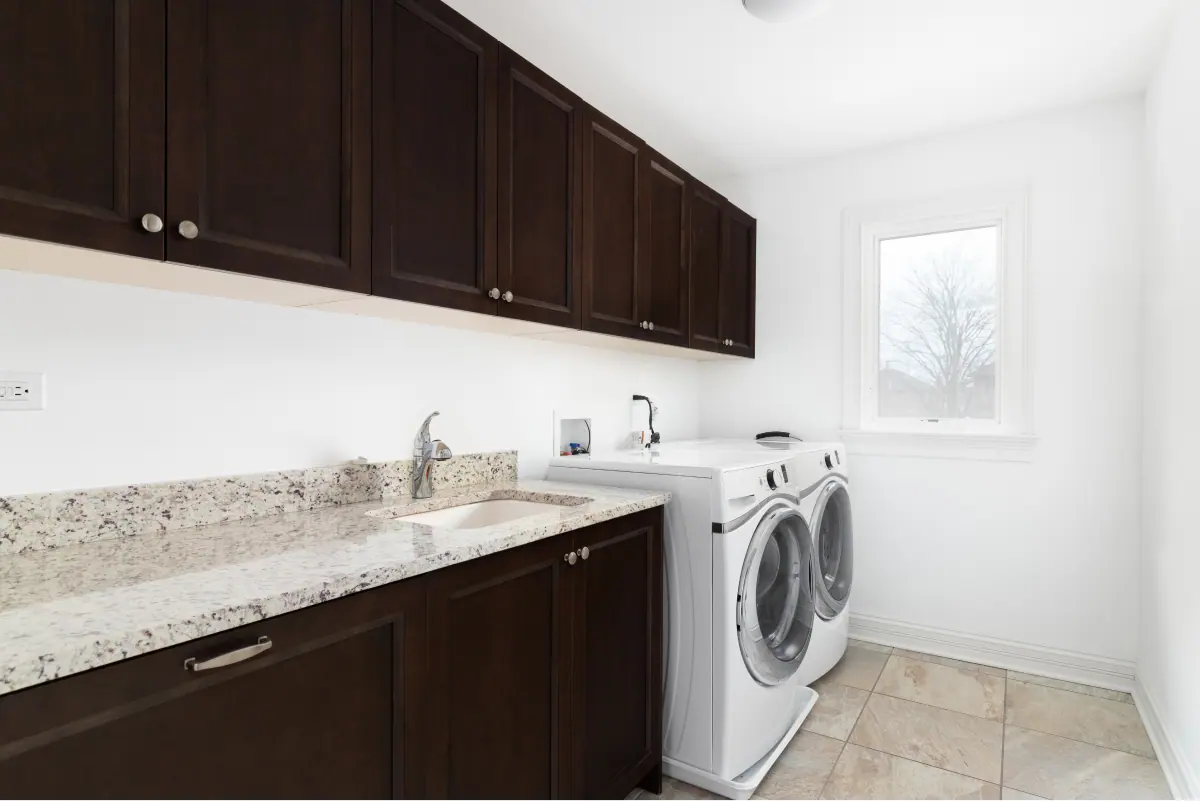
Storage, benches and lighting that earn their space
Older housing stock here - ex-government houses and 1960s to 1980s brick homes in Belconnen, Tuggeranong, Woden and the Inner North - usually puts the laundry in a narrow room off the back of the house. In a room like that the walls are the only spare space you have.
- Go vertical. Shelves, cabinets or open racks up the wall add storage without taking floor.
- Put a benchtop over the washer and dryer. It gives you a sorting and folding surface. Use a heat- and moisture-resistant material.
- Stack or combine the appliances. A stacked pair or a washer-dryer combo frees a whole run of floor.
- Use fold-away fittings. A wall-mounted ironing board and a fold-down drying rack disappear when they are not in use.
- Fit pull-out hampers and organisers. They keep the sorting off the bench.
- Add a mudroom corner. Hooks and a bench with storage under it work well where the laundry is also the back door.
- Keep a drying and folding zone. It is the feature that makes the room work day to day.
Light, neutral colours make a small laundry read as larger. For lighting, use energy-efficient LED overheads for the room and under-cabinet lighting on the bench, where you actually need to see what you are doing.
A patterned splashback or a run of feature tile lifts a laundry for very little money. Our guide to splashback materials and what each one suits covers the options and what they cost per square metre.
Flooring, ventilation and waterproofing
Flooring takes the worst of this room: a wet basket put down, an overflow nobody saw, a dropped bottle of bleach. Tile and vinyl are what we lay in here. Repairability is as much of the reason as wear: a cracked tile comes out on its own, and a sheet of vinyl is replaced in an afternoon. What does not belong in a laundry is anything that swells once water sits on it, which rules out floating timber and laminate however good the click-lock looks in the showroom. The benchtop faces the same test: heat, water and a dropped iron, without marking.
Ventilation is not optional. An effective exhaust fan, or a window that actually gets opened, is what stops condensation. Through a Canberra winter, an unheated laundry with a dryer running and no airflow is the first place mould appears in the house, usually on the ceiling above the machine. For the full treatment, read our guide to waterproofing and ventilation in a wet room.
Waterproofing belongs in the quote in writing, with the area it covers stated. It is one of the cheapest line items on the page and the most expensive one to put right afterwards.
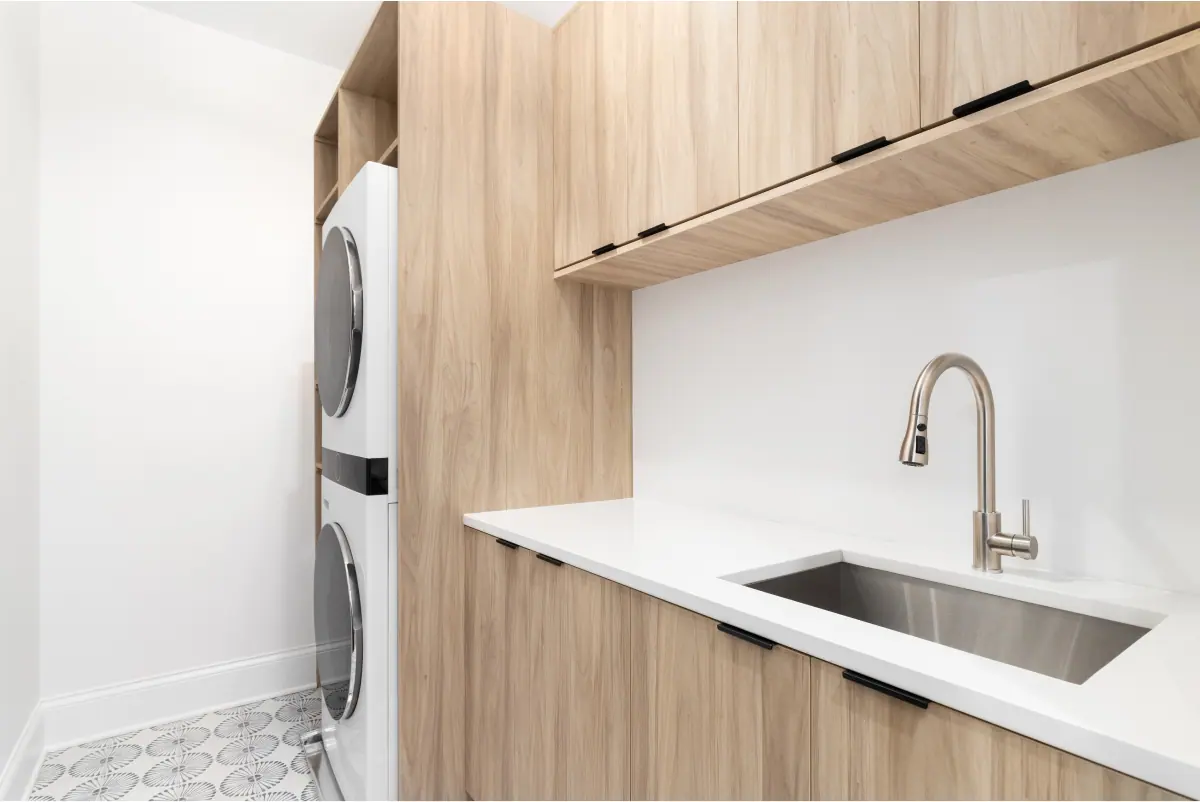
What to do yourself, and what to leave to a licensed trade
Painting, shopping and clearing the room are yours. Plumbing, electrical and cabinetry are not. All plumbing and electrical work has to meet Australian standards, and the cost of fixing a bad connection buried in a wall is far greater than the labour you saved.
When you compare quotes, ask for a detailed, itemised task list rather than a single figure. A quote that cannot be broken down cannot be compared. The same test applies to bathrooms, and what a bathroom renovation quote should include sets out the line-by-line version.
If your laundry sits next to the bathroom and both are original, it is usually cheaper to do them together than as two separate jobs. Our laundry renovation service covers both rooms, and you can see the standard of finish in the projects, named by suburb and room.
Frequently asked questions
How much does a laundry renovation cost in Canberra? Most laundry renovations run between $5,000 and $15,000 in 2026, subject to a site inspection. Where the plumbing and electrical stay where they are, you sit at the lower end.
Do I need approval to renovate a laundry in the ACT? Minor internal work such as a laundry upgrade normally needs no approval: internal work that changes nothing structural is exempt development under the Planning (Exempt Development) Regulation 2023. Structural change or a heritage listing may need approval from the Territory Planning Authority - there are no local councils in the ACT.
Can I stay in the house while the laundry is done? Yes. You will need somewhere else to wash until the room is finished, so arrange that before the appliances are disconnected.
What can I do myself? Painting, shopping and clearing the room. Leave plumbing, electrical and cabinetry to a licensed trade.
Get a quote for your laundry
Build your laundry in the instant quote designer and send the design to us, or ask for a fast free quote and book a site inspection. Either way you get an itemised written quote rather than a ballpark.
Written by Oleg Cha, owner of Apex Bathrooms ACT. Renovating Canberra bathrooms since 2008. Updated September 2026.