A heated towel rail will not heat your Canberra bathroom. Here is why I fit one anyway
If you are planning a bathroom in Canberra and the heated towel rail is on the maybe list, here is my honest view, having renovated bathrooms here since 2008. It will not heat the room. It is not the heater, and anyone who buys it as one will be disappointed. I still recommend it, and I will tell you why.
What it is, and what it is not
A heated towel rail is a small electric radiator shaped so you can hang towels on it. It runs warm, not hot, and it draws about what a couple of old light globes draw. Compared with the heating cable under the tiles, which warms the whole floor and the room above it, a rail is a trickle. If you want a warm bathroom at six on a July morning, the floor does that. The rail does something else.
The hours between showers
Everything else in a bathroom heats in bursts. The floor comes on for the morning and the evening. The bulbs, if you have them, for ten minutes. In between, the room drifts back towards the temperature of the slab, and in a Canberra winter that is a long way down.
The rail is the one thing in the room that is warm the whole time. Warm air rises off it, cooler air moves in underneath to take its place, and over the hours the whole room settles a little above where it would otherwise sit. That is convection, the same thing the heated floor does on a bigger scale. The rail cannot make the room warm. What it does is stop the room going cold. The difference between walking into a fridge and walking into a room.
Dry towels
This sounds small until you have spent a winter without it. A towel that gets wet at seven in the morning, in a cold bathroom with the door shut, is still damp at seven at night, and by midweek it smells like it. On a heated rail it is dry by lunchtime. A dry towel is warmer on the skin, it does not smell, and it lasts years longer. In a house with children, where the towels work twice a day, that alone pays for the rail.
Less condensation
Cold surfaces are where the steam goes. It lands on the coldest tiles and the mirror and runs down them, and that is where the mould starts. A warm floor takes the biggest cold surface out of the room, and the rail keeps the air moving and a little warmer between showers, so less of the moisture settles overnight. The exhaust fan still does the real work of getting the steam out, and ventilation has to be in the plan either way. The rail just makes the fan's job easier.
The one in Amaroo
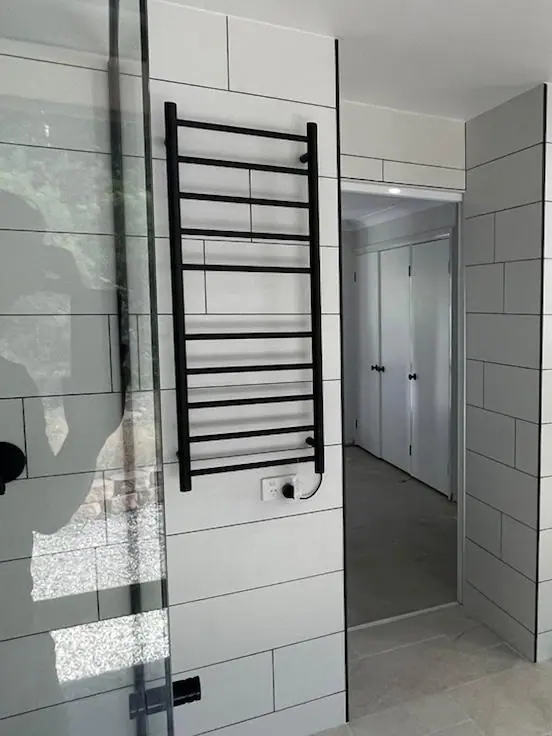
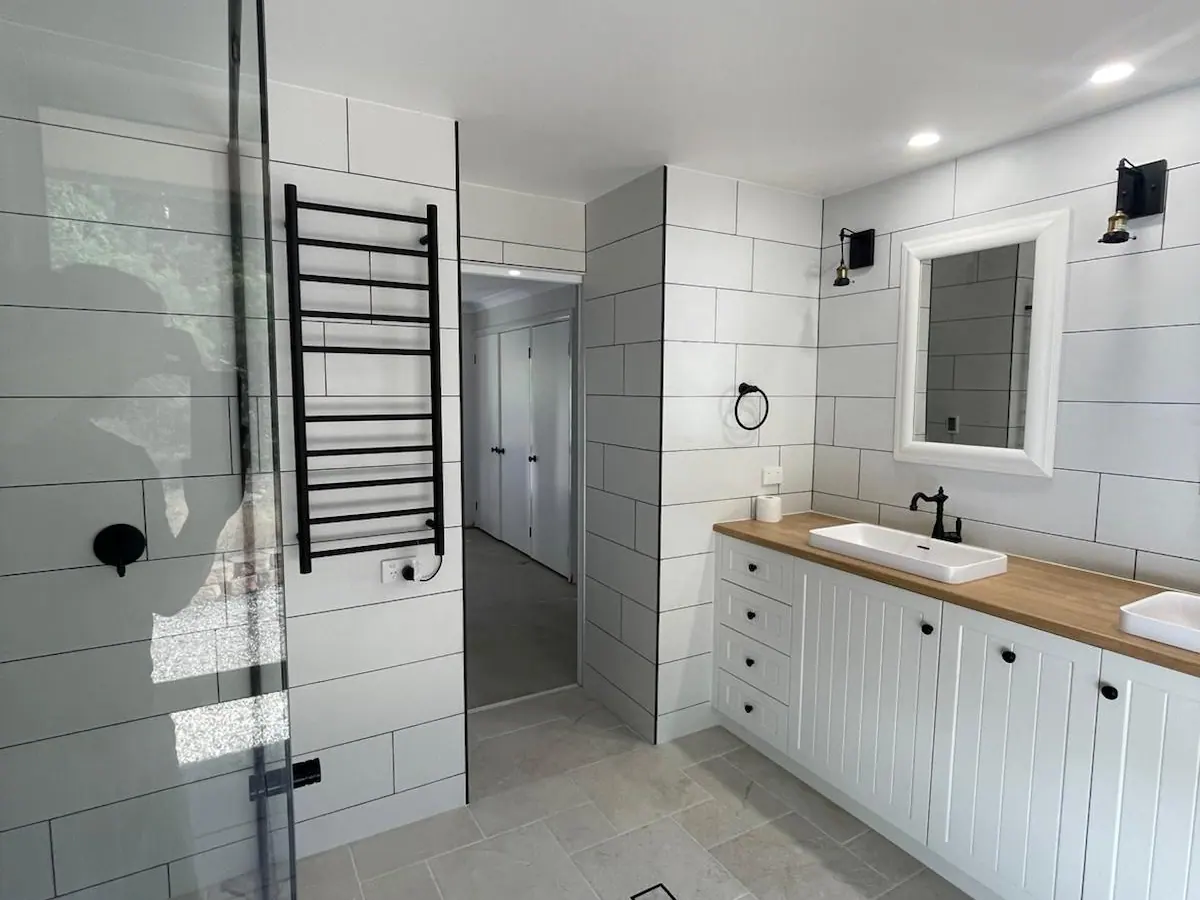
The photo at the top of this page is a main bathroom we renovated in Amaroo: a black ladder rail on the wall beside the shower screen, with its power point fitted below it. It sits where you step out of the shower, which is where a rail belongs, not behind the door where it warms the hinges. The rest of the room is below.
How we do it
It goes in while the walls are open, with a power point or a hard-wired connection put there for it by a licensed electrician, as all electrical work in the ACT must be. Choose the position at the design stage, next to the shower and clear of the vanity. If you want it to cost next to nothing to run, have it on a timer: on through the hours the bathroom is used, off through the night. Left on around the clock it still draws very little, but it is drawing it for nobody.
My honest view
If the budget only stretches to one thing, put heating under the floor. If it stretches to two, add the rail. The floor does the mornings; the rail does the hours in between, keeps the towels dry and keeps the tiles drier. It will never be the thing that heats your bathroom. It is the thing that stops your bathroom being cold, which in this town is most of the year.