Heating a Canberra bathroom in winter: why I put it under the tiles, not in the ceiling
If you own a home in Canberra, you know the bathroom at six on a July morning: the tiles are freezing, the window is wet, and nobody gets in the shower until the heater has been on. Which heater is the question. I have been renovating bathrooms here since 2008, and the one most of my clients start with is a bank of heat-lamp bulbs in the ceiling, right over the vanity. When they ask what I would put in instead, it is heating cable under the tiles.
What the bulbs actually do
A heat lamp is an infrared bulb. It heats whatever sits in its beam, in a circle underneath it, and not much else. Stand under it and the top of your head and your shoulders warm up. Step out of the circle, or switch it off, and the warmth is gone that second, because nothing has stored it. The floor you are standing on has not changed at all.
In most bathrooms the unit is over the vanity, so the warm spot is in front of the basin. The shower, the toilet and the floor are as cold as they were. And what warm air the bulbs do make goes straight up to the ceiling, which is the one place you are not.
What a heated floor does
Under-tile heating is a cable laid in the tile bed and run from a thermostat on the wall. It heats the floor, and the floor heats the room, in two ways at once.
The floor gives off gentle warmth across its whole surface, so there is no hot spot and no cold corner. And the air touching the floor warms and rises, cooler air sinks and warms in turn, and the whole room comes up to temperature. That is convection. It is why a heated floor warms a bathroom from the bottom up instead of cooking the top of your head. The tiles hold the heat, so the room stays warm after the thermostat has cut out, and the warm part is the part your bare, wet feet are standing on.
Why I recommend it
Because the people who have it tell me it is better, and they say the same two things. The heat is not shooting down onto their head. And the whole room is warm, not just the patch in front of the vanity.
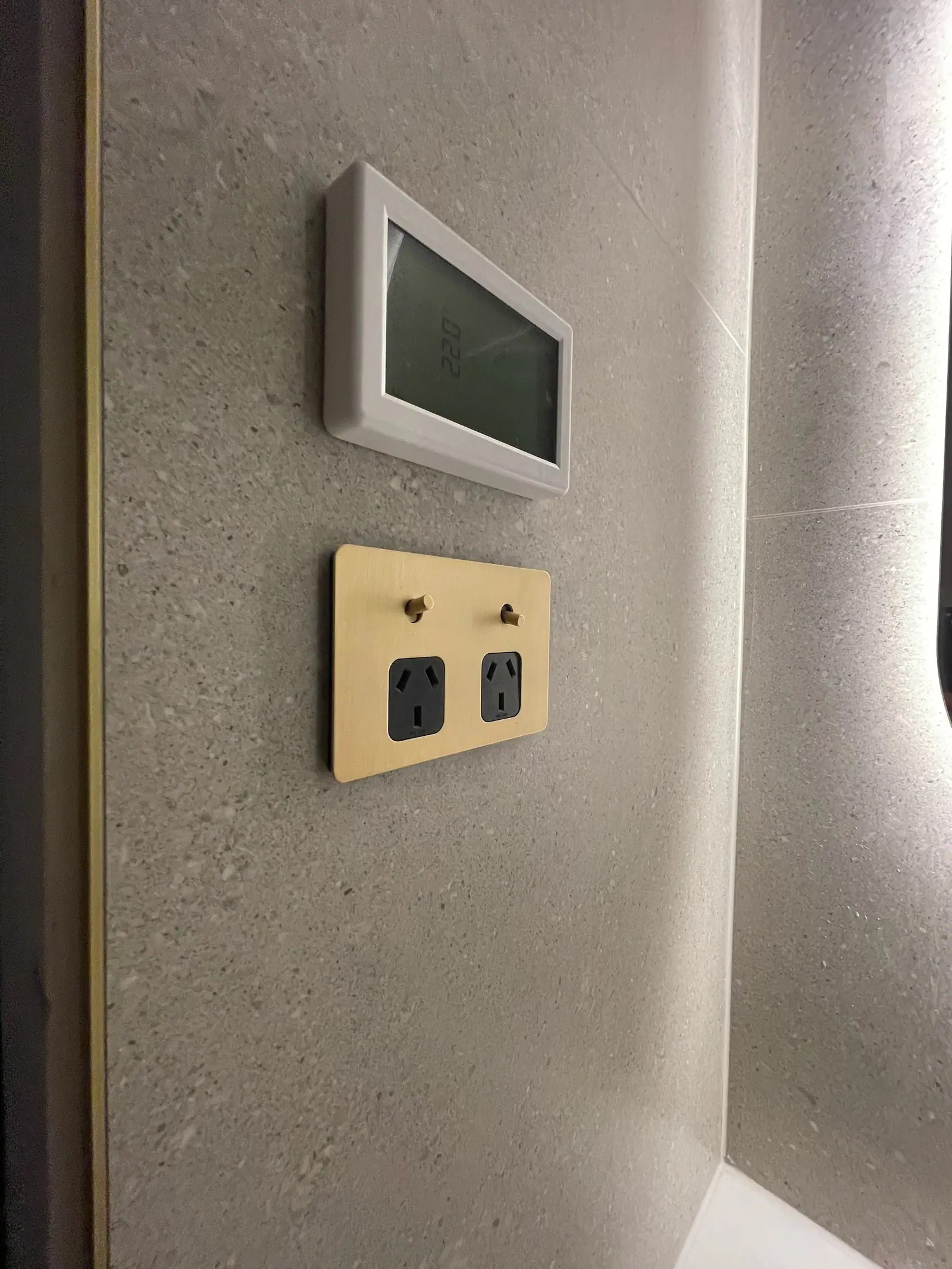
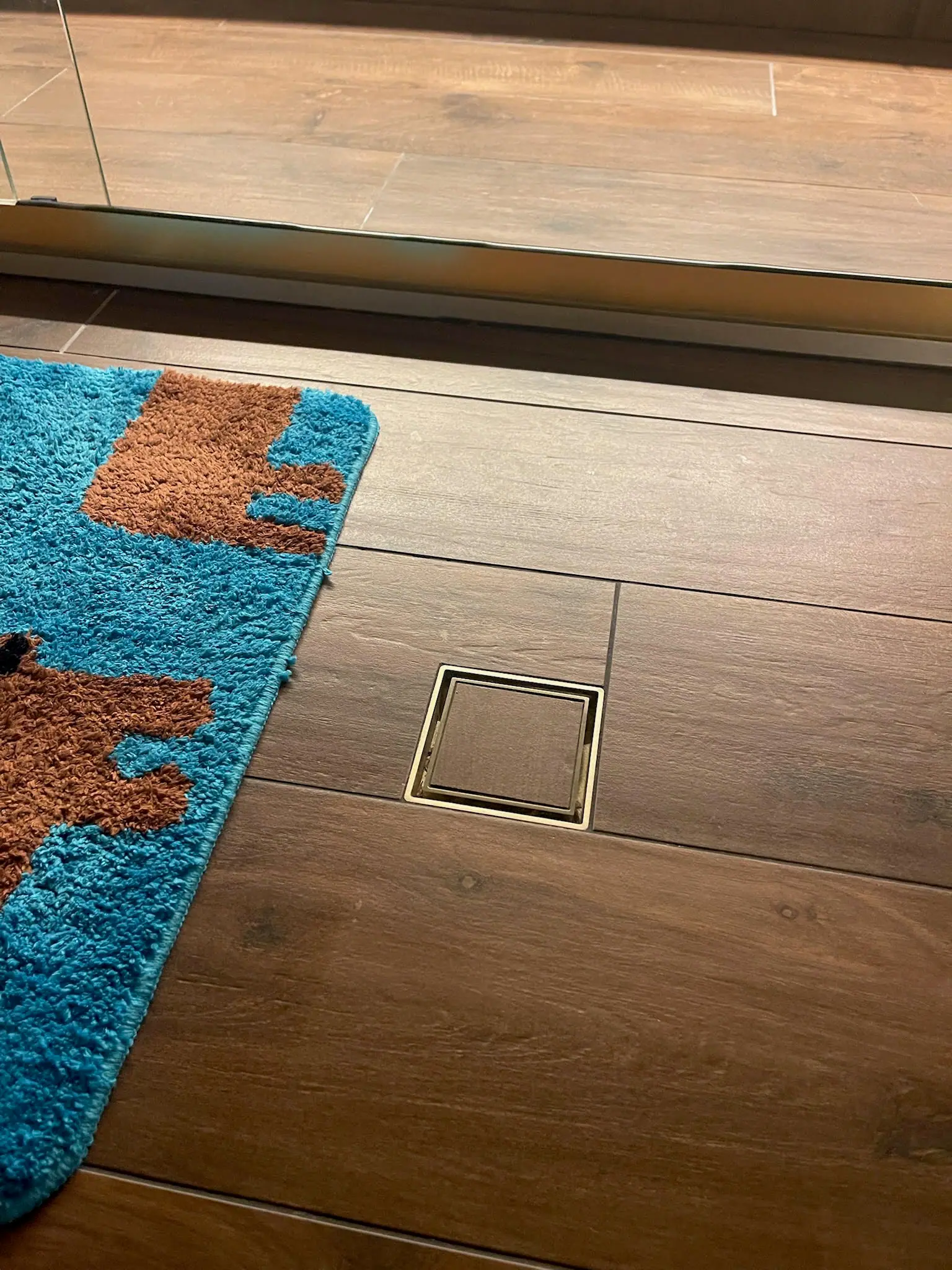
The ensuite we are building in Wanniassa has heating cable under the whole floor, and no heat lamp. The photo at the top of this page is its thermostat, on the wall beside the switches, set to 22. The photo below is the floor itself: timber-look tiles with the cable underneath them, a brass tile-insert waste at the shower screen, and the bath mat that belongs to the youngest person in the house. That is the floor that is warm at six in the morning. Nobody in that house will stand under a heat lamp to get warm.
The same ensuite has hidden lighting instead of a ceiling of downlights and a double shower; it is a room built for the hour before bed and the hour after waking, which is when a bathroom earns its keep.
The research, in two sentences
The comfort standards heating engineers work to put a comfortable floor at about 19 to 29 degrees, and they count a big gap between the temperature at your head and at your feet as one of the things that makes a room feel wrong. A heated floor gives the smallest head-to-feet gap of any heating there is, warm feet and a cool head, and a bulb in the ceiling gives you the opposite.
The floor at six in the morning
The Bureau of Meteorology's average July minimum at Canberra Airport is 0.1 degrees. A tiled floor on a concrete slab in an unheated bathroom sits close to that when you walk in, and it does not care how many bulbs are in the ceiling above it. That is the floor the bulbs leave you standing on.
Cold surfaces are also where the condensation goes. Warm, wet air meets the coldest thing in the room and runs down it, and that is where the mould starts. A warm floor takes the biggest cold surface out of the room. The exhaust fan still does the real work of getting the steam out, and ventilation has to be in the plan either way, but a dry warm floor helps.
What it costs to run, honestly
I will not tell you it is cheaper to run than the bulbs, because it is not. Hour for hour, a bathroom floor draws about what a four-bulb heat lamp draws. The difference is what you get for it: the bulbs warm one person for ten minutes, and the floor warms the room.
Use the thermostat's timer. Have it come on before the morning shower and again in the evening, and let it rest in between. Run that way it costs about what the bulbs cost, and the room is warm when you walk in. Leave it on all day and it will cost more. That is worth knowing before you decide.
How we do it
We lay heating cable under the tiles, set out before they go down, with the thermostat on the wall. The electrical connection is made by a licensed electrician, as all electrical work in the ACT must be. It goes in while the floor is up anyway, as part of the bathroom renovation, which is the time to do it; lifting a finished floor to add it later is a different job. We do not publish a price for it, because it depends on the room. It is a line in your written quote, like everything else in the cost of a renovation.
What the bulbs are still good for
They are instant, they are cheap to buy, and the three-in-one units put heat, light and an exhaust fan through one hole in the ceiling. A heated floor takes a while to come up, which is what the timer is for, and it does not ventilate anything, so the fan stays either way. If you want to keep the unit for its fan and its light, keep it. Just do not rely on the bulbs to make the room warm.
My honest view
A heat lamp heats a person. A heated floor heats a bathroom. In a Canberra winter that is the whole argument. When we renovate a bathroom I would rather spend the heating money under the tiles, where you stand, than in the ceiling, where you do not.