Why I fitted a heating fan, not a plain exhaust fan, in an ensuite in Wanniassa, Canberra
Every bathroom in Canberra has an exhaust fan, and in July most of them are switched off. I understand why. Here is what I fitted in a Wanniassa ensuite instead, and the reason it gets used.
The problem with the plain fan
A plain exhaust fan does one thing: it pulls air out of the room. That air has to be replaced, and it comes in under the door from the hallway. In January nobody notices. In a Canberra July, the hallway is cold, and the fan is pulling the only warm air in the house out through the roof while cold air pours in around your ankles. So people do what anyone would do. They leave it off, shower with the door shut, and the steam stays.
Steam that stays goes to the coldest surfaces in the room: the window, the mirror, the outside wall, the ceiling in the corner above the shower. It runs down them, it soaks in, and by August there is a grey patch on the ceiling that comes back however often it is wiped. I wrote about what that does to a bathroom in my guide to waterproofing and ventilation. The membrane keeps water in the shower. The fan is what keeps the rest of the room dry, and a fan that is never switched on keeps nothing dry.
What a heating fan is
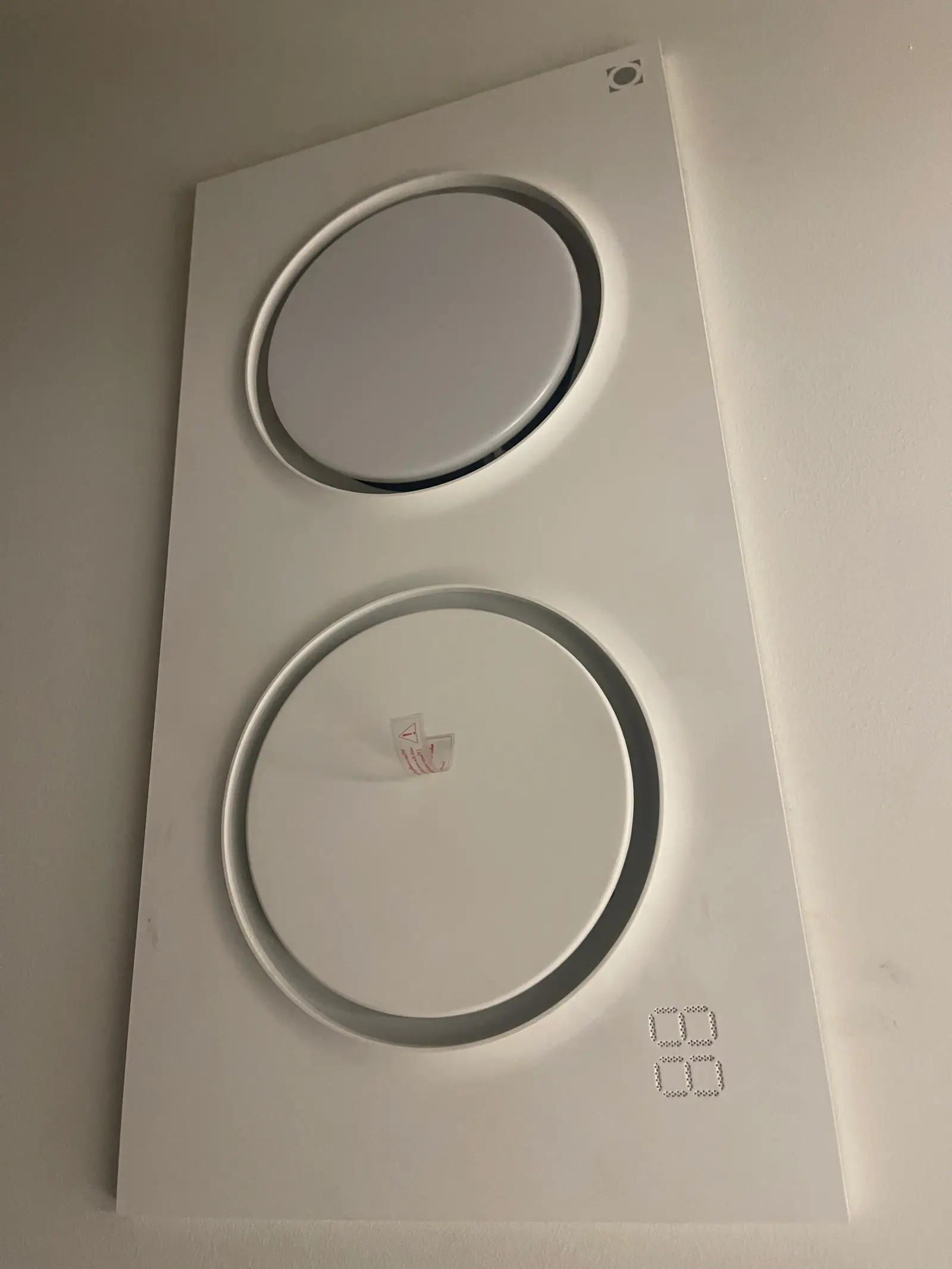
A heating fan is an exhaust fan with a heater built into the same ceiling unit. Not the bulbs. A fan that blows warm air down into the room while the other side of it is drawing the wet air out. In winter you get warm air in; in summer the same unit moves plain air. It is ducted to the outside like any exhaust fan should be, and it sits in the ceiling where a plain fan would have gone, with the light in it as well, so it does not change the look of the room. The photo at the top of this page is the one in Wanniassa: two round grilles in one white panel.
What it changes is the one thing that matters: you switch it on. The room gets warmer, not colder, when the fan is running, so there is no reason to leave it off. The steam goes out the way it is supposed to.
The one in Wanniassa
The ensuite we are building in Wanniassa is a bigger room than it was. We combined it with the room next door, which is how it got its double shower. A bigger room is more air to clear after a shower, and with a young family it is showers morning and night. A small fan in the corner was never going to keep up, and a fan that stayed switched off was going to keep up even less.
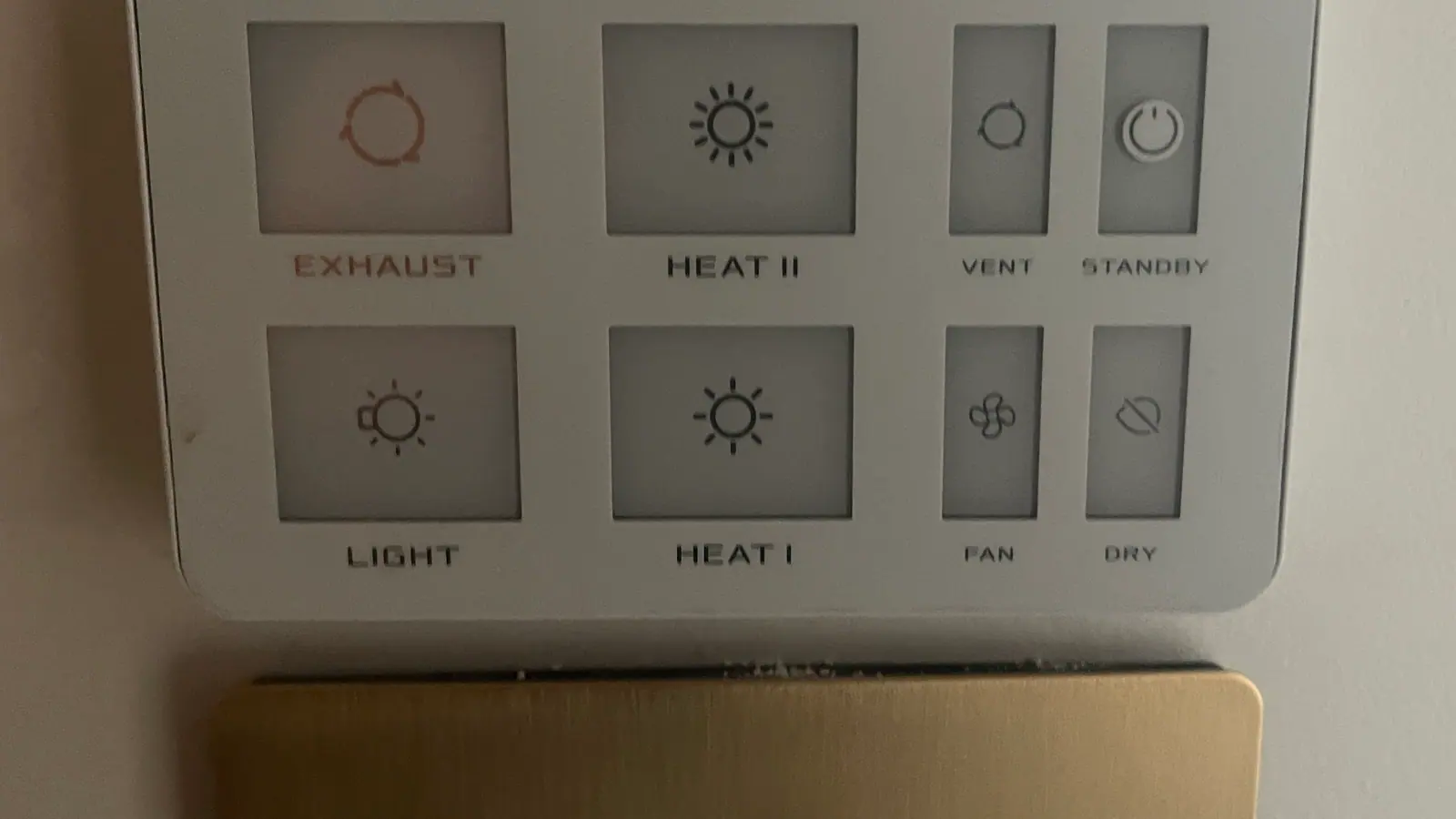
So the ceiling has one unit, and the wall has one panel for it, above the brass switches. Its buttons are the whole story: exhaust, two heat levels, vent, fan, the light, and a dry setting. No timer and no sensor. Heat and exhaust on when you step into the shower, off when the mirror is clear. The owners asked for simple, and simple is what will actually get used.
What it is not
It is not the room's heater. The heat under the tiles does that, and I have explained why I put the heating money in the floor. The heating fan runs for the ten or fifteen minutes around a shower, and its warmth is there so that you run the fan, not so that the bathroom is warm at six in the morning. The floor does the mornings. The heated towel rail does the hours in between. The fan does the fifteen minutes when the room is full of steam.
It is not silent either. It is a fan. A good one is quieter than the old ones, but if you want it to disappear, that is a bigger duct and a quieter motor, and it is worth asking about at the design stage rather than after the ceiling is closed.
My honest view
A fan nobody switches on is the most expensive fan in the house, because the mould bill comes later. If your bathroom is cold in winter and the fan stays off, the fix is not a bigger fan. It is a fan that does not make the room colder. That is the whole reason I fitted one in Wanniassa, and it is what I will suggest for most Canberra bathrooms we renovate from here.