Floor Tiling Costs and Repairs in Canberra
If you are tiling a floor in a Canberra home, how it is laid matters as much as which tile you choose, because our seasonal temperature swings punish shortcuts.
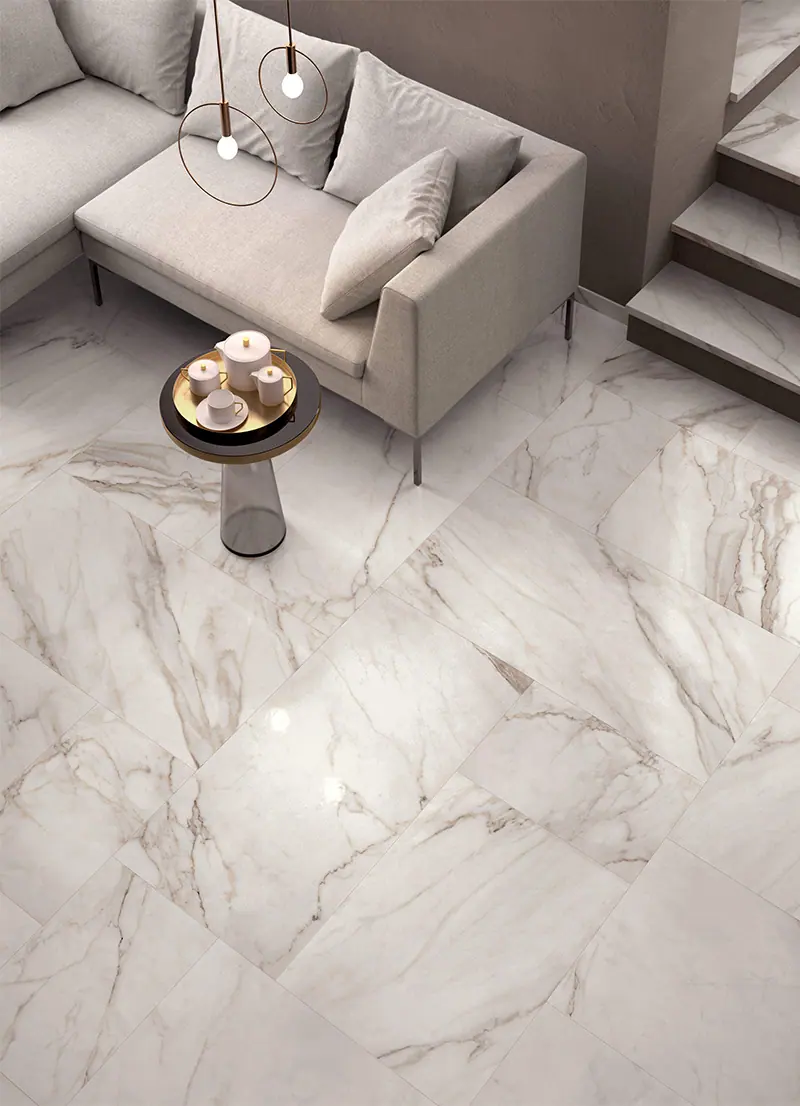
A tiled floor should outlast most of the house. When one fails early it is almost never the tile's fault - it is the substrate, the adhesive, the set-out or the expansion allowance. This guide covers what a floor costs to lay here, where the money goes, what goes wrong when it is rushed, and how to tell whether your existing floor needs a repair or a replacement.
What a tiled floor costs
Our own published figure for tiling a standard-sized home is $10,000-$20,000 (our floor tiling page, 2023), covering the labour, the materials and the other costs that go with the job.
For the work itself, the rate we published in 2024 on our bathroom tiles and materials guide was $60-$90 per square metre to lay ceramic, excluding the tiles. Other materials lay at different rates because the work is different, and that guide compares them material by material.
Both are a guide to relative cost, not a quote. Adhesive, grout, tools, machinery and extra labour on a complex job all move the total, and none of it can be settled without a site inspection. The full cost picture for a renovation is in our bathroom renovation cost guide.
Where you can save, and where you should not
- Buy materials that last. It is worth investing in good-quality materials that will not need frequent repair or replacement. A cheap tile that chips or a tile not rated for floors costs more over the life of the floor than the difference you saved. Check reviews and warranties before you buy.
- Use local trades. A local tiler is not charging you travel, and knows what the building stock around here is like before lifting the first tile.
- Compare quotes. Different companies price the same work differently. Get more than one, and compare what is included, not only the number at the bottom.
- Re-use what is sound - carefully. Laying new tile over an existing floor is sometimes possible, but only if the old floor is well bonded and level, the added height does not foul doors, cabinets or fixtures, and the room is not a wet area. In a bathroom the old tiles usually have to come up so the waterproofing membrane can be replaced, which is the opposite of a saving if you skip it.
- Do not save by doing it yourself. A professional is often the cheaper option in the end, because the work lasts and you get advice on materials and quantities before you buy them.
The mistakes that ruin a floor
Not allowing for movement. Tile floors naturally need to expand and contract as temperatures and humidity fluctuate through the year - and with cold winters, hot dry summers and large day-to-night swings, a floor here moves through a wider range than the tile was sitting at when it was laid. Without an expansion allowance at the perimeter and at the right intervals, a floor buckles or cracks. The spacing depends on the area, the substrate and the tile, so it is specified for the job rather than taken off a rule of thumb.
The wrong grout, or the wrong adhesive. Both are matched to the tile, and our tiles and materials guide sets out how.
Imprecise measurement. If you make even the slightest mistake in measurement, it can result in a lot of extra time and money spent correcting the problem. Allow proper time for measuring and cutting; a bad set-out shows at every doorway.
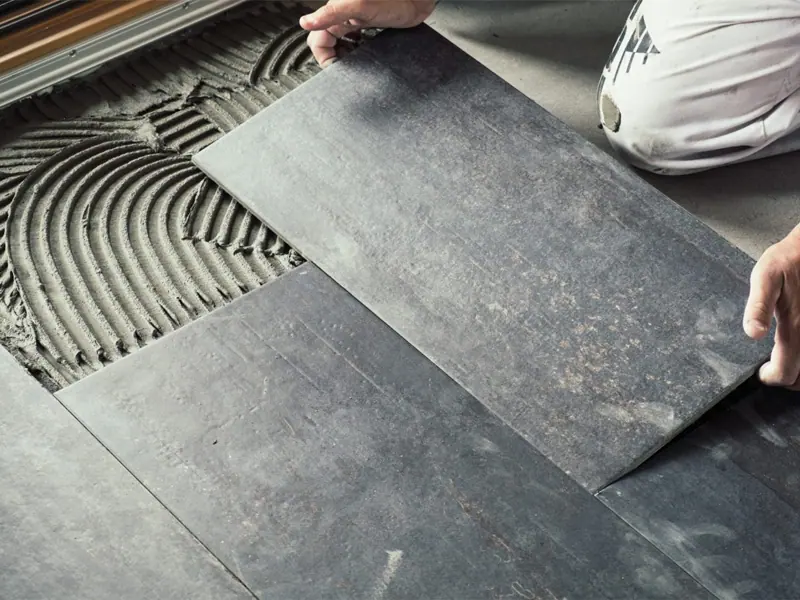
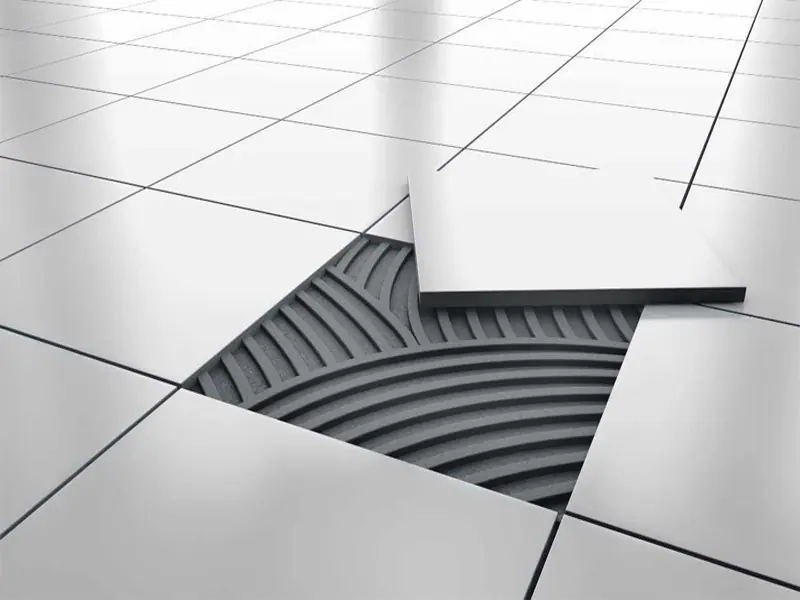
Too little adhesive, unevenly applied. Each tile needs full, even support. Too little and tiles work loose over time, leaving the floor damaged or uneven.
Poor surface preparation. The floor has to be completely clean and free of dirt, dust and debris before any tile goes down. Any contaminants left on the surface can prevent the tiles from adhering correctly, resulting in loose or crooked tiles.
Done properly, preparation means levelling and cleaning the substrate, removing the existing floor covering, filling bumps and holes, and laying a moisture barrier over concrete. In a wet area it also means sound waterproofing before anything is tiled - covered in our waterproofing and ventilation guide.
Five signs your floor needs replacing
- Widespread cracks or chips. A single cracked tile is a repair. Multiple cracked or chipped tiles mean the material is worn out, weather-damaged, or sitting on a subfloor that is moving.
- Loose or hollow tiles. Tiles that feel loose or spongy, or sound hollow when tapped, indicate adhesive failure, often caused by water penetration.
- Water damage or mould. Persistent dampness, a musty smell, or visible mould in the grout lines means the floor is no longer keeping water out.
- Deteriorating or missing grout. Crumbling or cracked grout allows water to seep behind tiles, risking damage to the underlying structure.
- Sagging or ageing surfaces. A sagging line in the floor points to trouble below. Floors laid before modern underlayment practice are usually a substrate problem rather than a tile problem - and the original floors in the 1960s to 1980s brick houses across Belconnen, Woden and Tuggeranong were laid well before it.
Left alone, small cracks stop being small. Debris and moisture get underneath, nearby tiles lift or break, and water reaches the subfloor, where it brings mould and rot. Broken tiles with exposed edges also cut feet.
What wears a floor out
- Improper installation - an uneven subfloor or the wrong adhesive creates stress points, and that is where the cracking starts.
- Moisture - water getting in weakens the adhesive holding the tiles down.
- Impact and traffic - dropped objects and constant foot traffic chip, scratch and fracture tiles.
- Temperature change - rapid swings make tiles and subfloor expand and contract, which buckles or cracks them. This is the one most often left out of generic advice, and it is the most relevant here.
- Low-quality materials - substandard tiles, or a wall tile put on a floor, wear out early.
Looking after a tiled floor
- Sweep or vacuum regularly. Removing dirt and grit prevents scratches and keeps tiles looking polished - grit is what dulls a floor, not use.
- Mop with a pH-neutral cleaner. A mild, neutral detergent protects both the tile surface and the grout.
- Seal the grout. Grout is porous and prone to stains, so sealing helps maintain its durability and appearance. Test it rather than diarise it: drop water on a grout line and re-seal when it stops beading. A hard-working kitchen floor reaches that point sooner than a guest bathroom. Natural stone needs a stone-specific sealant.
- Use mats at doorways and in high-traffic areas, and felt pads under furniture.
- Deal with spills immediately, so moisture does not sit in the grout.
Before the tiler arrives
Clear the room, clean the surface, isolate power to the area, remove old coverings, finish any repairs, and confirm that the tiles and materials are on site. Order enough - running short mid-job means a dye-lot mismatch as well as a delay. A kitchen or bathroom floor is usually a two-day job; a whole house or a commercial floor is closer to five.
If your job is in Queanbeyan rather than the ACT, it is in New South Wales, which is a different jurisdiction for licensing and approvals. It makes no difference to how the floor is laid, but it is worth knowing who you are dealing with.

Repair or replace
A professional assessment will tell you which one you are looking at, and it is worth getting before you commit either way. Replacing a failed floor properly removes the hazards - sharp edges, mould, water reaching the structure - rather than covering them. Catching it early protects the appearance and the structure, and it is always the cheaper of the two conversations. You can see finished floors in our completed projects, and the material choice itself is covered in our bathroom tiles and materials guide.
Common questions
How do I know if my tiles need replacing rather than repairing? One cracked tile is a repair. Widespread cracking, several hollow or loose tiles, mould in the grout lines or a sagging line in the floor means the problem is underneath, and patching it only hides it.
What does floor tiling cost in Canberra? Our floor tiling page published $10,000-$20,000 for a standard-sized home in 2023, and our tiles and materials guide published $60-$90 per square metre to lay ceramic in 2024, excluding the tiles. Both are guides and every floor is priced after a site inspection.
Can I tile over existing tiles? Sometimes, if the existing floor is sound, well bonded and the extra height does not foul doors or fixtures. In a bathroom the old tiles usually have to come up so the waterproofing membrane underneath can be replaced.
How do I prepare a room before the tiler arrives? Clear the room, clean the surface, isolate power to the area, remove old floor coverings, finish any repairs, and make sure the tiles and materials are on site.
How often should grout be sealed? Test it rather than diarise it. Drop water on a grout line and re-seal when it stops beading. That comes around sooner on a kitchen floor than in a guest bathroom, because it depends on the sealer and the traffic.
When do I have to decide about underfloor heating? Before the floor goes down. Heating sits under the tile, so it has to be planned with the substrate and the screed. Adding it afterwards means lifting the floor you have just paid for, so decide it at the same time as the tile.
Get your floor quoted
Enter your room size and finishes in the instant quote designer and send the design to us, then we measure on site and quote it in writing. If you have a floor that is cracking, lifting or sounding hollow, send a photo and we will tell you honestly whether it is a repair or a replacement. Ask for a fast free quote, see all our tiling services, or contact us.
Written by Oleg Cha, owner of Apex Bathrooms ACT. Renovating Canberra bathrooms since 2008. Updated September 2026.